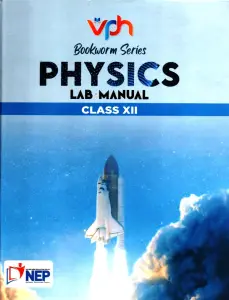


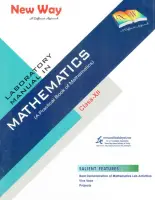










Big Think A Lab Manual of Physics For Class 12th
by
A.C. Thakur
₹0.00
Purchase Type

Out Of Stock
- Type : book
- Weight : GM
- ISBN :
- Publisher : Think Big Publishing House
- Seller : Amit Singh
- Authors : A.C. Thakur
Trending Product
-
NCERT Chemistry Part 1 Textbook For Class 11th
₹108.00 - ₹230.00 In stock
-
NCERT Chemistry Part 1 Textbook For Class 12th
₹120.00 - ₹200.00 In stock
-

NCERT Vistas Supplementary Reader in English For Class 12th
₹30.00 - ₹40.00 In stock
-
NCERT Physics Part 1 Textbook For Class 11th
₹72.00 - ₹120.00 In stock
-
Understanding Physics Waves and Thermodynamics for JEE Main and Advanced
₹258.00 - ₹430.00 In stock
No Description Added
No Table Content Added
Have Doubts Regarding This Product ? Ask on WhatsApp
-
Q1
How does this manual help in finding the frequency of AC mains?
A1
It provides a step-by-step sonometer experiment with AC supply, calculation of unknown frequency using standard tuning forks, and precautionary measures.
-
Q2
Does it cover conversion of galvanometer into both ammeter and voltmeter?
A2
Yes. Experiment 5 includes separate procedures for voltmeter and ammeter conversion using known galvanometer resistance and figure of merit.
-
Q3
How are meter bridge experiments explained for series and parallel combinations?
A3
The manual gives circuit diagrams, formula derivations, observation tables, and verification steps for verifying laws of combination of resistances.
-
Q4
Are ray diagrams for prism and lens experiments properly labelled?
A4
Yes. All optics experiments include neatly labelled ray diagrams for angle of minimum deviation, focal length determination, and refraction.
-
Q5
Does it include activities on identifying electronic components from a mixed collection?
A5
Activity 1 of Section B provides visual cues and testing methods to identify diode, LED, resistor, and capacitor accurately.
-
Q6
How is the refractive index of a liquid determined using a convex lens?
A6
The manual uses a convex lens and plane mirror setup with a liquid layer to measure combined focal length and calculate refractive index.
-
Q7
Is there guidance on using a multimeter for checking continuity and component condition?
A7
Yes. Activities explain how to measure AC/DC voltage, current, resistance, and test diodes/LEDs for working order.
-
Q8
How are I-V characteristic curves for a p-n junction diode presented?
A8
The experiment includes forward and reverse bias circuit diagrams, observation tables, and graph plotting for knee voltage and breakdown.
-
Q9
Does it cover both convex mirror and concave mirror focal length experiments?
A9
Yes. Separate experiments explain using a convex lens for convex mirror and u-v graph method for concave mirror.
-
Q10
Are there experiments on obtaining a lens combination with specified focal length?
A10
Activity 7 guides using two lenses from a given set to achieve desired focal length using lens formula.
No Syllabus Added