-
Mon-Fri: 10AM to 8PM 01722665665
-
My Account
-
-
0
Total :
₹ 0.00

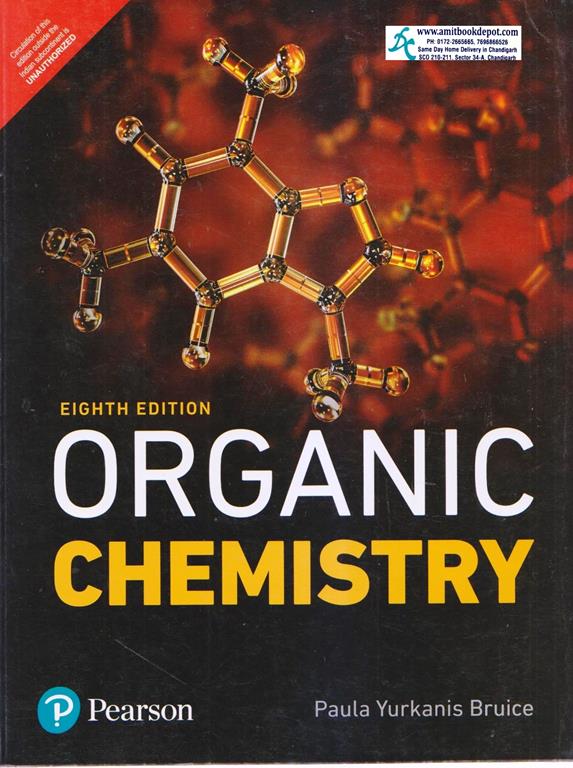

Yes, Chapter 9 covers SN1, SN2, E1, and E2 reactions of alkyl halides with stereochemical and kinetic comparisons.
Yes, Chapter 11 is devoted to organometallic compounds, including Grignard reagents and organolithium chemistry for carbon–carbon bond formation.
Chapter 14 provides detailed coverage of proton and carbon-13 NMR, including chemical shifts, splitting patterns, and integration.
Part Seven (Chapters 20–26) is dedicated to bioorganic compounds: carbohydrates, amino acids, proteins, lipids, and nucleic acids.
Yes, Chapter 28 covers pericyclic reactions, including cycloadditions, electrocyclic reactions, and sigmatropic rearrangements.
Yes, Chapter 12 focuses on radical substitution and addition reactions, including halogenation and polymerization mechanisms.
Chapter 18 details electrophilic aromatic substitution for benzene and substituted benzenes; Chapter 19 covers heterocyclic amines.
Yes, Chapter 23 details the organic chemistry of coenzymes, including NAD+, FAD, and coenzyme A derived from vitamins.
Chapter 13 includes mass spectrometry first, followed by infrared and UV/Vis spectroscopy in sequence.
Yes, Chapter 24 explains the organic chemistry of metabolic pathways such as glycolysis and the citric acid cycle.
No Description Added
Yes, Chapter 9 covers SN1, SN2, E1, and E2 reactions of alkyl halides with stereochemical and kinetic comparisons.
Yes, Chapter 11 is devoted to organometallic compounds, including Grignard reagents and organolithium chemistry for carbon–carbon bond formation.
Chapter 14 provides detailed coverage of proton and carbon-13 NMR, including chemical shifts, splitting patterns, and integration.
Part Seven (Chapters 20–26) is dedicated to bioorganic compounds: carbohydrates, amino acids, proteins, lipids, and nucleic acids.
Yes, Chapter 28 covers pericyclic reactions, including cycloadditions, electrocyclic reactions, and sigmatropic rearrangements.
Yes, Chapter 12 focuses on radical substitution and addition reactions, including halogenation and polymerization mechanisms.
Chapter 18 details electrophilic aromatic substitution for benzene and substituted benzenes; Chapter 19 covers heterocyclic amines.
Yes, Chapter 23 details the organic chemistry of coenzymes, including NAD+, FAD, and coenzyme A derived from vitamins.
Chapter 13 includes mass spectrometry first, followed by infrared and UV/Vis spectroscopy in sequence.
Yes, Chapter 24 explains the organic chemistry of metabolic pathways such as glycolysis and the citric acid cycle.