Categories
College Bookssss >
BA PU Chandigarh
BSC PU Chandigarh
MSC PU Chandigarh
BBA PU Chandigarh
MA PU Chandigarh
Medical Books
Engineering Books
Management Books
PGDCA Books
BCOM PU Chandigarh
MCOM PU Chandigarh
BCA PU Chandigarh
MCA PU Chandigarh
animate-books

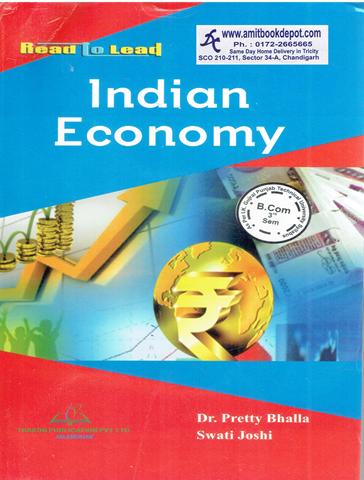
Indian Economy BCom 3rd Semester Punjab Technical University

by Madhurima
₹0 ₹0.00(-/ off)

Rating & Reviews

23 Customer Review

Purchase Type

Have Doubts Regarding This Product ? Ask Your Question

  • Q1
    Is this book strictly aligned with the latest Punjab Technical University BCom 3rd Semester syllabus for Indian Economy?
    A1

    Yes, this book is meticulously crafted to cover 100% of the prescribed syllabus for course code B.COMGE 301-18, including all units and topics as outlined by PTU.

  • Q2
    Does the book include a comparative analysis between the Planning Commission and NITI Aayog?
    A2

    Yes, Unit 3 of the book contains a dedicated section that explains the features, objectives, and key differences between the former Planning Commission and the current NITI Aayog.

  • Q3
    How does this book explain the difference between Economic Growth and Economic Development?
    A3

    Unit 1 provides a clear, conceptual explanation with distinct points, highlighting the qualitative versus quantitative differences, which is a fundamental part of the syllabus.

  • Q4
    Are the topics of Liberalization, Privatization, and Globalization (LPG) covered in detail?
    A4

    Absolutely. Unit 3 offers a comprehensive analysis of the LPG policies of 1991, including their causes, components, and a critical assessment of their impact on the Indian economy.

  • Q5
    Is the role of MSMEs in the Indian economy discussed in this textbook?
    A5

    Yes, Unit 2 contains a specific chapter on MSMEs (Micro, Small, and Medium Enterprises) and cottage industries, detailing their significance, challenges, and contributions to industrial development.

  • Q6
    Does the book cover the recent agricultural policies of the Indian government?
    A6

    The book covers the major agriculture policies of India, including historical context and significant recent initiatives, providing a balanced view of the sector's policy framework.

  • Q7
    Are there practice questions or exercises included for self-assessment?
    A7

    Yes, each of the four units concludes with an "Exercise" section designed to help students revise the concepts and practice for their semester examinations.

  • Q8
    How is the complex topic of Balance of Payments explained for BCom students?
    A8

    Unit 4 breaks down the Balance of Payments (BOP) into manageable components, clearly distinguishes it from Balance of Trade, and explains the causes and types of disequilibrium in a student-friendly manner.

  • Q9
    Does the content go beyond theoretical concepts to include current economic data and examples?
    A9

    While focused on the core syllabus, the book provides relevant context and examples to illustrate theoretical concepts, making them relatable to the current Indian economic scenario.

  • Q10
    Is the Finance Commission and its role in center-state financial relations explained?
    A10

    Yes, Unit 3 includes a chapter on the Finance Commission in India, detailing its constitution, functions, and its critical role in regulating center-state financial relations.

0.00

0 Overall Rating
  • 5
    0
  • 4
    0
  • 3
    0
  • 2
    0
  • 1
    0

Try this product & share your review & thoughts

No Description Added

No Table Content Added

Have Doubts Regarding This Product ? Ask Your Question

  • Q1
    Is this book strictly aligned with the latest Punjab Technical University BCom 3rd Semester syllabus for Indian Economy?
    A1

    Yes, this book is meticulously crafted to cover 100% of the prescribed syllabus for course code B.COMGE 301-18, including all units and topics as outlined by PTU.

  • Q2
    Does the book include a comparative analysis between the Planning Commission and NITI Aayog?
    A2

    Yes, Unit 3 of the book contains a dedicated section that explains the features, objectives, and key differences between the former Planning Commission and the current NITI Aayog.

  • Q3
    How does this book explain the difference between Economic Growth and Economic Development?
    A3

    Unit 1 provides a clear, conceptual explanation with distinct points, highlighting the qualitative versus quantitative differences, which is a fundamental part of the syllabus.

  • Q4
    Are the topics of Liberalization, Privatization, and Globalization (LPG) covered in detail?
    A4

    Absolutely. Unit 3 offers a comprehensive analysis of the LPG policies of 1991, including their causes, components, and a critical assessment of their impact on the Indian economy.

  • Q5
    Is the role of MSMEs in the Indian economy discussed in this textbook?
    A5

    Yes, Unit 2 contains a specific chapter on MSMEs (Micro, Small, and Medium Enterprises) and cottage industries, detailing their significance, challenges, and contributions to industrial development.

  • Q6
    Does the book cover the recent agricultural policies of the Indian government?
    A6

    The book covers the major agriculture policies of India, including historical context and significant recent initiatives, providing a balanced view of the sector's policy framework.

  • Q7
    Are there practice questions or exercises included for self-assessment?
    A7

    Yes, each of the four units concludes with an "Exercise" section designed to help students revise the concepts and practice for their semester examinations.

  • Q8
    How is the complex topic of Balance of Payments explained for BCom students?
    A8

    Unit 4 breaks down the Balance of Payments (BOP) into manageable components, clearly distinguishes it from Balance of Trade, and explains the causes and types of disequilibrium in a student-friendly manner.

  • Q9
    Does the content go beyond theoretical concepts to include current economic data and examples?
    A9

    While focused on the core syllabus, the book provides relevant context and examples to illustrate theoretical concepts, making them relatable to the current Indian economic scenario.

  • Q10
    Is the Finance Commission and its role in center-state financial relations explained?
    A10

    Yes, Unit 3 includes a chapter on the Finance Commission in India, detailing its constitution, functions, and its critical role in regulating center-state financial relations.

No Syllabus Added

0.00

0 Overall Rating
  • 5
    0
  • 4
    0
  • 3
    0
  • 2
    0
  • 1
    0

Try this product & share your review & thoughts

Top Trending Product

Related Product

Related Product

Related Blog Posts

Latest Blogs

Latest Blogs

blog-img
Classic Literature Reimagined: Discuss modern twists on classic novels.
Lorem ipsum dolor sit amet, consectetur adipiscing elit, sed do eiusmod tempor incididunt ut labore et dolore magna aliqua. Ut enim ad minim veniam, quis nostrud exercitation ullamco Lorem ipsum dolor sit amet, consectetur adipiscing elit, sed do eiusmod tempor incididunt ut labore et dolore magna aliqua. Utenim ad minim veniam, quis nostrud exercitation ullamco Lorem ipsum dolor sit amet, consecte...
Read more
Author name | 10 jan, 2025
blog-img
Classic Literature Reimagined: Discuss modern twists on classic novels.
Lorem ipsum dolor sit amet, consectetur adipiscing elit, sed do eiusmod tempor incididunt ut labore et dolore magna aliqua. Ut enim ad minim veniam, quis nostrud exercitation ullamco Lorem ipsum dolor sit amet, consectetur adipiscing elit, sed do eiusmod tempor incididunt ut labore et dolore magna aliqua. Utenim ad minim veniam, quis nostrud exercitation ullamco Lorem ipsum dolor sit amet, consecte...
Read more
Author name | 10 jan, 2025
blog-img
Classic Literature Reimagined: Discuss modern twists on classic novels.
Lorem ipsum dolor sit amet, consectetur adipiscing elit, sed do eiusmod tempor incididunt ut labore et dolore magna aliqua. Ut enim ad minim veniam, quis nostrud exercitation ullamco Lorem ipsum dolor sit amet, consectetur adipiscing elit, sed do eiusmod tempor incididunt ut labore et dolore magna aliqua. Utenim ad minim veniam, quis nostrud exercitation ullamco Lorem ipsum dolor sit amet, consecte...
Read more
Author name | 10 jan, 2025
blog-img
Classic Literature Reimagined: Discuss modern twists on classic novels.
Lorem ipsum dolor sit amet, consectetur adipiscing elit...
Read more
Author Name | 10 Jan, 2025
blog-img
Classic Literature Reimagined: Discuss modern twists on classic novels.
Lorem ipsum dolor sit amet, consectetur adipiscing elit...
Read more
Author Name | 10 Jan, 2025
blog-img
Classic Literature Reimagined: Discuss modern twists on classic novels.
Lorem ipsum dolor sit amet, consectetur adipiscing elit...
Read more
Author Name | 10 Jan, 2025
blog-img
Classic Literature Reimagined: Discuss modern twists on classic novels.
Lorem ipsum dolor sit amet, consectetur adipiscing elit...
Read more
Author Name | 10 Jan, 2025
blog-img
Classic Literature Reimagined: Discuss modern twists on classic novels.
Lorem ipsum dolor sit amet, consectetur adipiscing elit...
Read more
Author Name | 10 Jan, 2025
blog-img
Classic Literature Reimagined: Discuss modern twists on classic novels.
Lorem ipsum dolor sit amet, consectetur adipiscing elit...
Read more
Author Name | 10 Jan, 2025
blog-img
Classic Literature Reimagined: Discuss modern twists on classic novels.
Lorem ipsum dolor sit amet, consectetur adipiscing elit...
Read more
Author Name | 10 Jan, 2025
blog-img
Classic Literature Reimagined: Discuss modern twists on classic novels.
Lorem ipsum dolor sit amet, consectetur adipiscing elit...
Read more
Author Name | 10 Jan, 2025
blog-img
Classic Literature Reimagined: Discuss modern twists on classic novels.
Lorem ipsum dolor sit amet, consectetur adipiscing elit...
Read more
Author Name | 10 Jan, 2025