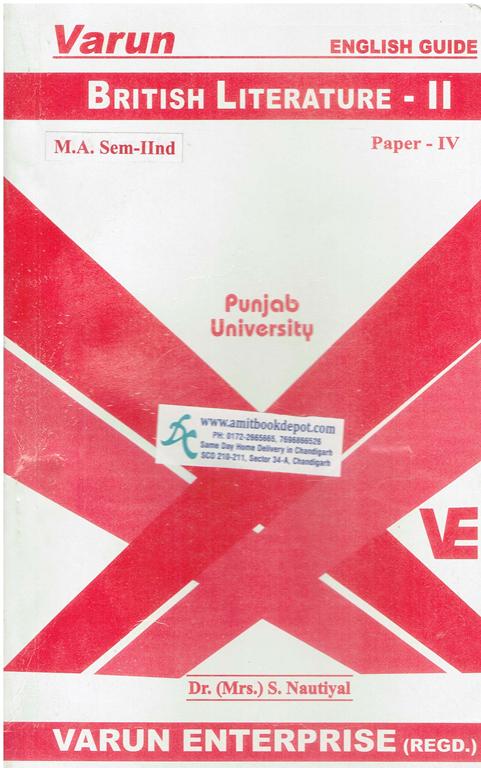
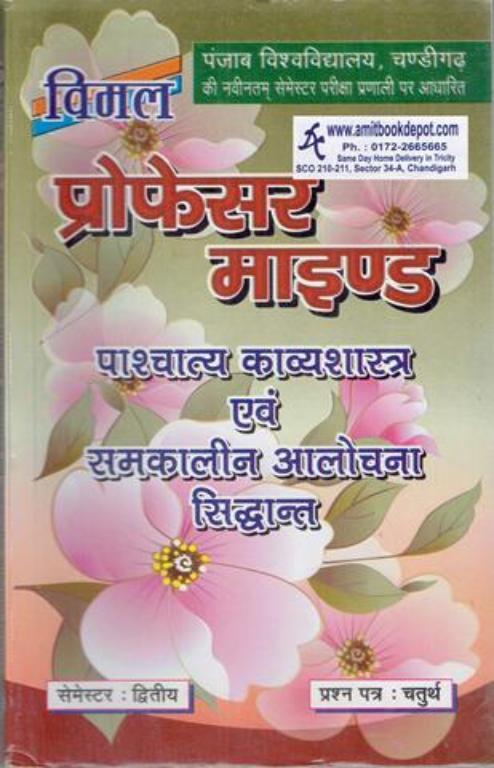
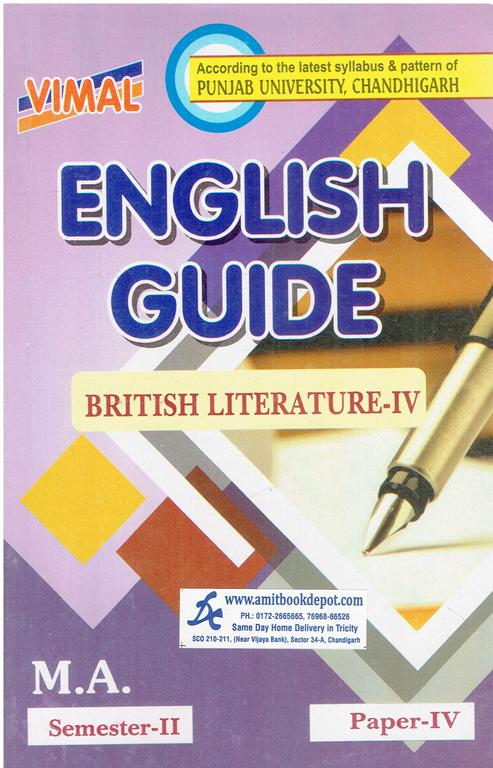
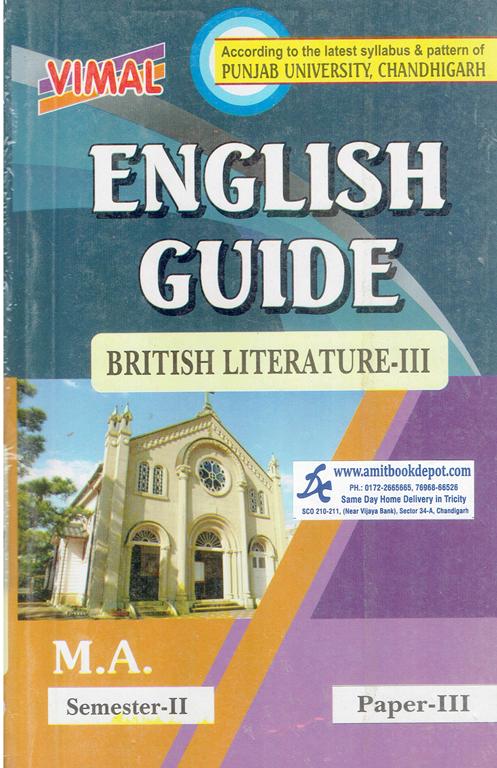
Varun English Guide British Literature 2 For MA Semester 2nd Paper 4 Panjab University Chandigarh
Varun English Guide British Literature 2 For MA Semester 2nd Paper 4 Panjab University Chandigarh
by Madhurima
₹350₹350.00(-/
off)
Rating & Reviews
23 Customer Review
The Varun English Guide for British Literature—IV (M.A. Semester 2, Paper 4) is the definitive study companion for Panjab University postgraduate students. Authored by Dr. S. Nautiyal, this comprehensive guide provides detailed, syllabus-specific analysis of all prescribed texts, including works by T.S. Eliot, W.B. Yeats, Samuel Beckett, James Joyce, Aldous Huxley, George Orwell, and Virginia Woolf. It simplifies complex Modernist poetry, Absurdist drama, stream-of-consciousness narrative, and critical essays, offering clear explanations, thematic insights, and exam-focused content. This essential academic resource is designed to ensure a thorough understanding and excellent performance in university examinations.
Varun English Guide: British Literature – IV for M.A. Semester 2 (Paper 4), Panjab University, Chandigarh
The Varun English Guide for British Literature—IV (M.A. Semester 2, Paper 4) is an indispensable academic resource meticulously crafted for Panjab University postgraduate students. Authored by Dr. S. Nautiyal and published by Varun Enterprises, this guide provides a comprehensive and syllabus-specific exploration of twentieth-century British literature. It is designed to bridge the gap between the complex literary texts prescribed by the university and the student’s need for clear, critical, and exam-oriented understanding.
This guide is structured to align perfectly with the official Panjab University M.A. English syllabus, offering a detailed analysis of the prescribed texts from the modernist and post-war periods. The twentieth century was an era defined by profound conflict, uncertainty, and radical artistic experimentation. This guide systematically unpacks the ways in which political upheavals, world wars, shifting social structures, and intellectual revolutions shaped the literature of the time. It serves as an essential tool for mastering the literary techniques, thematic concerns, and critical contexts of this turbulent epoch.
Organized into five distinct units, the book offers a logical and in-depth progression through the curriculum. Unit I delves into the seminal poetry of Modernist poets who reshaped the literary landscape. It includes critical interpretations of T.S. Eliot’s “The Burial of the Dead” from The Waste Land and “The Love Song of J. Alfred Prufrock,” exploring themes of fragmentation and spiritual desolation. The guide provides detailed analysis of W.B. Yeats’s “Easter 1916,” examining its political and historical resonance. It further decodes the ironic mythology in W.H. Auden’s “The Shield of Achilles” and the visceral symbolism in D.H. Lawrence’s poems “Mosquitoes” and “Snakes.”
Unit II is dedicated entirely to Samuel Beckett’s seminal Absurdist drama, Waiting for Godot. The guide breaks down its existential themes, minimalist structure, and the iconic dialogues that define the Theatre of the Absurd, making this challenging play accessible for critical evaluation. Unit III focuses on James Joyce’s groundbreaking A Portrait of the Artist as a Young Man, guiding students through its stream-of-consciousness narrative, stylistic evolution, and the protagonist Stephen Dedalus’s quest for artistic and personal identity.
Unit IV presents a thorough study of Aldous Huxley’s dystopian masterpiece, Brave New World. The guide analyzes its critique of scientific utopianism, consumerism, and the loss of individuality, drawing relevant parallels to contemporary societal issues. Finally, Unit V offers critical insights into the profound prose of the period. It covers George Orwell’s incisive essays—“Notes on Nationalism,” “The Prevention of Literature,” and “Reflections on Gandhi”—dissecting his views on politics, language, and integrity. This unit also provides a comprehensive exploration of Virginia Woolf’s feminist landmark, A Room of One’s Own, elucidating its arguments about women, fiction, and the necessity of intellectual freedom and financial independence.
Key features of this Varun English Guide include chapter-wise, line-by-line explanations and summaries of complex texts; clear elucidation of literary terms and modernist techniques; critical commentary highlighting major themes, symbols, and character analyses; discussion of historical and socio-political contexts relevant to each work; and potential examination questions and discussion points to aid in revision and paper preparation. It is more than a summary book; it is a critical companion that fosters a deeper appreciation and a strategic approach to the subject.
For students pursuing their M.A. in English from Panjab University, this guide is an authoritative, reliable, and essential study aid. It empowers students to navigate the demanding syllabus with confidence, develop nuanced arguments, and excel in their Semester 2 examinations. Ensure your academic success with this definitive guide to British Literature—IV.
Is this guide a replacement for the original literary texts, or is it a supplementary study aid?
A1
This guide is a comprehensive supplementary study aid. It provides critical analysis, summaries, and explanations essential for exam preparation, but we strongly recommend students read the original prescribed texts from the Panjab University syllabus for a complete understanding.
Q2
How is this guide specifically tailored for Panjab University's M.A. Semester 2, Paper 4 syllabus?
A2
The guide is meticulously structured unit-by-unit to match the official Panjab University syllabus. It includes all prescribed poems, essays, and full-length texts, focusing solely on the authors and works listed, with analysis designed to meet the university's examination standards.
Q3
Does the guide provide background context for understanding Modernist literature?
A3
Yes. Each unit includes an introduction covering the historical, political, and intellectual context of the 20th century—such as the World Wars, the rise of psychoanalysis, and social changes—that shaped the themes and styles of Modernist authors like Eliot, Woolf, and Joyce.
Q4
How are complex poems like "The Waste Land" or "Sailing to Byzantium" explained?
A4
Complex poems are broken down with line-by-line explanations, clear paraphrasing of difficult passages, analysis of key symbols (e.g., the "unreal city," the golden bird), and discussions of their central themes, making them accessible for detailed study and exam answers.
Q5
Does it cover the specific literary techniques used in the prescribed texts, such as stream of consciousness or mythic method?
A5
Absolutely. The guide dedicates sections to explaining key Modernist techniques like stream of consciousness (Joyce), the mythic method (Eliot), interior monologue (Woolf), and the absurdist style (Beckett), linking each technique directly to the prescribed texts.
Q6
Are the essays by George Orwell and Virginia Woolf analyzed for their core arguments and structure?
A6
Yes. The guide provides a clear breakdown of the core thesis, supporting arguments, and logical structure for each Orwell essay and A Room of One's Own. It highlights key quotations and explains their critical significance for writing analytical essays.
Q7
Is the analysis of Waiting for Godot focused on its philosophical themes or its theatrical elements?
A7
The guide balances both. It explores the play’s existential and absurdist philosophical themes (meaninglessness, waiting) while also analyzing its dramatic elements, such as dialogue, minimalism, and symbolism, which are crucial for a comprehensive understanding.
Q8
How does the guide handle the comparative study of dystopian elements in Brave New World?
A8
It provides a focused analysis of Huxley's dystopian vision—covering themes of technological control, consumerism, and loss of individuality—and often includes points of contrast with other dystopian works (like Orwell's *1984*) to deepen critical perspective, as expected at the M.A. level.
Q9
Does it include a glossary of important literary and critical terms relevant to this paper?
A9
Yes, the guide features a dedicated section or integrated definitions for essential literary terminology pertinent to Modernism, such as "objective correlative," "dissociation of sensibility," "feminist critique," "dystopia," and "theatre of the absurd."
Q10
Can this book be used by students from other universities with a similar syllabus on 20th-Century British Literature?
A10
While it is specifically optimized for Panjab University, students from other universities with overlapping syllabi covering these core Modernist texts will find the in-depth literary analysis and critical frameworks highly valuable and adaptable.
0.00
0 Overall Rating
5
0
4
0
3
0
2
0
1
0
Try this product & share your review &
thoughts
UNIT - I
1. T.S. Eliot: The Burial of the Dead
2. W.B. Yeats: Easter 1916
3. W.H. Auden: The Shield of Achilles
4. D.H. Lawrence: Mosquitoes & Snakes
UNIT - II
1. Samuel Beckett: Waiting for Godot
UNIT - III
1. James Joyce: Portrait of an Artist as a Young Man
UNIT - IV
1. Aldous Huxley: Brave New World
UNIT - V
1. George Orwell: Notes on Nationalism The Prevention of Literature Reflections on Gandhi
2. Virginia Woolf: A Room of One’s Own.
Latest Syllabus of English Guide British Literature 2 For MA Semester 2nd Paper 4 Panjab University (PU) Chandigarh
British Literature – IV
An era of conflict and uncertainty, the twentieth century marked a break from the preceding Victorian period. The old was rejected; ‘Make it new,’ announced Ezra Pound, and ‘new it indeed was.’ It was an age of literary experimentation, which broke away from established rules, traditions, and conventions. The focus was to search for new ways of looking at man, the universe, and man’s role in it. A period of shifting perspectives, class struggle, gender equality, devastating wars, and collapse of traditional notions of culture and aesthetics. Modernist avant-gardes challenged and often shocked the people with their ideas, styles, and techniques. The objective of the paper is to study and understand the ways in which political, historical, economic, scientific, intellectual, environmental, social, and cultural events have shaped the art and literature of the time. The students will be introduced to the innovative literary techniques, intellectual trends, and changes in themes of this turbulent period. At the end of the course they will be familiar with the representative texts, literary terminology, and the socio-political and cultural events that shaped twentieth-century literature.
Unit I
1. T.S. Eliot, “The Burial of the Dead” Canto I, The Waste Land; “Love Song of Alfred J. Prufrock,” The Complete Poems and Plays of T.S. Eliot (Faber, Main Edition, 2004).
2. W.B. Yeats, “Easter 1916,” “A Prayer for My Daughter,” & “Sailing to Byzantium,” Yeats: Poetry and Prose (Norton Critical Editions, 2001).
3. W.H. Auden, “The Shield of Achilles,” “September 1, 1939,” & “Musée des Beaux Arts,” W.H. Auden: Collected Poems. Ed. Edward Mendelson (Vintage International, 1991).
4. D. H. Lawrence, “Mosquitoes” & “Snakes,” Complete Poems of D.H. Lawrence (London: Wordsworth, 1994).
Unit II
1. Samuel Beckett, Waiting for Godot (Pearson, 2012).
Unit III
1. James Joyce, Portrait of an Artist as a Young Man (Vintage Classics, 2012).
Unit IV
1. Aldous Huxley, Brave New World (Vintage Classics, 2004).
Unit V
1. George Orwell, “Notes on Nationalism,” “The Prevention of Literature,” & “Reflections on Gandhi,” George Orwell: Essays (Penguin UK, 2000), also available at www.orwellfoundation.com
2. Virginia Woolf, A Room of One’s Own. London (Penguin Modern Classics, 2002).
Varun English Guide: British Literature – IV for M.A. Semester 2 (Paper 4), Panjab University, Chandigarh
The Varun English Guide for British Literature—IV (M.A. Semester 2, Paper 4) is an indispensable academic resource meticulously crafted for Panjab University postgraduate students. Authored by Dr. S. Nautiyal and published by Varun Enterprises, this guide provides a comprehensive and syllabus-specific exploration of twentieth-century British literature. It is designed to bridge the gap between the complex literary texts prescribed by the university and the student’s need for clear, critical, and exam-oriented understanding.
This guide is structured to align perfectly with the official Panjab University M.A. English syllabus, offering a detailed analysis of the prescribed texts from the modernist and post-war periods. The twentieth century was an era defined by profound conflict, uncertainty, and radical artistic experimentation. This guide systematically unpacks the ways in which political upheavals, world wars, shifting social structures, and intellectual revolutions shaped the literature of the time. It serves as an essential tool for mastering the literary techniques, thematic concerns, and critical contexts of this turbulent epoch.
Organized into five distinct units, the book offers a logical and in-depth progression through the curriculum. Unit I delves into the seminal poetry of Modernist poets who reshaped the literary landscape. It includes critical interpretations of T.S. Eliot’s “The Burial of the Dead” from The Waste Land and “The Love Song of J. Alfred Prufrock,” exploring themes of fragmentation and spiritual desolation. The guide provides detailed analysis of W.B. Yeats’s “Easter 1916,” examining its political and historical resonance. It further decodes the ironic mythology in W.H. Auden’s “The Shield of Achilles” and the visceral symbolism in D.H. Lawrence’s poems “Mosquitoes” and “Snakes.”
Unit II is dedicated entirely to Samuel Beckett’s seminal Absurdist drama, Waiting for Godot. The guide breaks down its existential themes, minimalist structure, and the iconic dialogues that define the Theatre of the Absurd, making this challenging play accessible for critical evaluation. Unit III focuses on James Joyce’s groundbreaking A Portrait of the Artist as a Young Man, guiding students through its stream-of-consciousness narrative, stylistic evolution, and the protagonist Stephen Dedalus’s quest for artistic and personal identity.
Unit IV presents a thorough study of Aldous Huxley’s dystopian masterpiece, Brave New World. The guide analyzes its critique of scientific utopianism, consumerism, and the loss of individuality, drawing relevant parallels to contemporary societal issues. Finally, Unit V offers critical insights into the profound prose of the period. It covers George Orwell’s incisive essays—“Notes on Nationalism,” “The Prevention of Literature,” and “Reflections on Gandhi”—dissecting his views on politics, language, and integrity. This unit also provides a comprehensive exploration of Virginia Woolf’s feminist landmark, A Room of One’s Own, elucidating its arguments about women, fiction, and the necessity of intellectual freedom and financial independence.
Key features of this Varun English Guide include chapter-wise, line-by-line explanations and summaries of complex texts; clear elucidation of literary terms and modernist techniques; critical commentary highlighting major themes, symbols, and character analyses; discussion of historical and socio-political contexts relevant to each work; and potential examination questions and discussion points to aid in revision and paper preparation. It is more than a summary book; it is a critical companion that fosters a deeper appreciation and a strategic approach to the subject.
For students pursuing their M.A. in English from Panjab University, this guide is an authoritative, reliable, and essential study aid. It empowers students to navigate the demanding syllabus with confidence, develop nuanced arguments, and excel in their Semester 2 examinations. Ensure your academic success with this definitive guide to British Literature—IV.
UNIT - I
1. T.S. Eliot: The Burial of the Dead
2. W.B. Yeats: Easter 1916
3. W.H. Auden: The Shield of Achilles
4. D.H. Lawrence: Mosquitoes & Snakes
UNIT - II
1. Samuel Beckett: Waiting for Godot
UNIT - III
1. James Joyce: Portrait of an Artist as a Young Man
UNIT - IV
1. Aldous Huxley: Brave New World
UNIT - V
1. George Orwell: Notes on Nationalism The Prevention of Literature Reflections on Gandhi
Is this guide a replacement for the original literary texts, or is it a supplementary study aid?
A1
This guide is a comprehensive supplementary study aid. It provides critical analysis, summaries, and explanations essential for exam preparation, but we strongly recommend students read the original prescribed texts from the Panjab University syllabus for a complete understanding.
Q2
How is this guide specifically tailored for Panjab University's M.A. Semester 2, Paper 4 syllabus?
A2
The guide is meticulously structured unit-by-unit to match the official Panjab University syllabus. It includes all prescribed poems, essays, and full-length texts, focusing solely on the authors and works listed, with analysis designed to meet the university's examination standards.
Q3
Does the guide provide background context for understanding Modernist literature?
A3
Yes. Each unit includes an introduction covering the historical, political, and intellectual context of the 20th century—such as the World Wars, the rise of psychoanalysis, and social changes—that shaped the themes and styles of Modernist authors like Eliot, Woolf, and Joyce.
Q4
How are complex poems like "The Waste Land" or "Sailing to Byzantium" explained?
A4
Complex poems are broken down with line-by-line explanations, clear paraphrasing of difficult passages, analysis of key symbols (e.g., the "unreal city," the golden bird), and discussions of their central themes, making them accessible for detailed study and exam answers.
Q5
Does it cover the specific literary techniques used in the prescribed texts, such as stream of consciousness or mythic method?
A5
Absolutely. The guide dedicates sections to explaining key Modernist techniques like stream of consciousness (Joyce), the mythic method (Eliot), interior monologue (Woolf), and the absurdist style (Beckett), linking each technique directly to the prescribed texts.
Q6
Are the essays by George Orwell and Virginia Woolf analyzed for their core arguments and structure?
A6
Yes. The guide provides a clear breakdown of the core thesis, supporting arguments, and logical structure for each Orwell essay and A Room of One's Own. It highlights key quotations and explains their critical significance for writing analytical essays.
Q7
Is the analysis of Waiting for Godot focused on its philosophical themes or its theatrical elements?
A7
The guide balances both. It explores the play’s existential and absurdist philosophical themes (meaninglessness, waiting) while also analyzing its dramatic elements, such as dialogue, minimalism, and symbolism, which are crucial for a comprehensive understanding.
Q8
How does the guide handle the comparative study of dystopian elements in Brave New World?
A8
It provides a focused analysis of Huxley's dystopian vision—covering themes of technological control, consumerism, and loss of individuality—and often includes points of contrast with other dystopian works (like Orwell's *1984*) to deepen critical perspective, as expected at the M.A. level.
Q9
Does it include a glossary of important literary and critical terms relevant to this paper?
A9
Yes, the guide features a dedicated section or integrated definitions for essential literary terminology pertinent to Modernism, such as "objective correlative," "dissociation of sensibility," "feminist critique," "dystopia," and "theatre of the absurd."
Q10
Can this book be used by students from other universities with a similar syllabus on 20th-Century British Literature?
A10
While it is specifically optimized for Panjab University, students from other universities with overlapping syllabi covering these core Modernist texts will find the in-depth literary analysis and critical frameworks highly valuable and adaptable.
Latest Syllabus of English Guide British Literature 2 For MA Semester 2nd Paper 4 Panjab University (PU) Chandigarh
British Literature – IV
An era of conflict and uncertainty, the twentieth century marked a break from the preceding Victorian period. The old was rejected; ‘Make it new,’ announced Ezra Pound, and ‘new it indeed was.’ It was an age of literary experimentation, which broke away from established rules, traditions, and conventions. The focus was to search for new ways of looking at man, the universe, and man’s role in it. A period of shifting perspectives, class struggle, gender equality, devastating wars, and collapse of traditional notions of culture and aesthetics. Modernist avant-gardes challenged and often shocked the people with their ideas, styles, and techniques. The objective of the paper is to study and understand the ways in which political, historical, economic, scientific, intellectual, environmental, social, and cultural events have shaped the art and literature of the time. The students will be introduced to the innovative literary techniques, intellectual trends, and changes in themes of this turbulent period. At the end of the course they will be familiar with the representative texts, literary terminology, and the socio-political and cultural events that shaped twentieth-century literature.
Unit I
1. T.S. Eliot, “The Burial of the Dead” Canto I, The Waste Land; “Love Song of Alfred J. Prufrock,” The Complete Poems and Plays of T.S. Eliot (Faber, Main Edition, 2004).
2. W.B. Yeats, “Easter 1916,” “A Prayer for My Daughter,” & “Sailing to Byzantium,” Yeats: Poetry and Prose (Norton Critical Editions, 2001).
3. W.H. Auden, “The Shield of Achilles,” “September 1, 1939,” & “Musée des Beaux Arts,” W.H. Auden: Collected Poems. Ed. Edward Mendelson (Vintage International, 1991).
4. D. H. Lawrence, “Mosquitoes” & “Snakes,” Complete Poems of D.H. Lawrence (London: Wordsworth, 1994).
Unit II
1. Samuel Beckett, Waiting for Godot (Pearson, 2012).
Unit III
1. James Joyce, Portrait of an Artist as a Young Man (Vintage Classics, 2012).
Unit IV
1. Aldous Huxley, Brave New World (Vintage Classics, 2004).
Unit V
1. George Orwell, “Notes on Nationalism,” “The Prevention of Literature,” & “Reflections on Gandhi,” George Orwell: Essays (Penguin UK, 2000), also available at www.orwellfoundation.com
2. Virginia Woolf, A Room of One’s Own. London (Penguin Modern Classics, 2002).
0.00
0 Overall Rating
5
0
4
0
3
0
2
0
1
0
Try this product & share your review &
thoughts
Top Trending Product
Related
Product
Related Product
Related Blog Posts
Latest Blogs
Latest Blogs
Classic Literature Reimagined: Discuss modern twists on classic novels.
Lorem ipsum dolor sit amet, consectetur adipiscing elit, sed
do
eiusmod tempor incididunt ut labore et dolore magna aliqua. Ut enim ad minim
veniam, quis nostrud exercitation ullamco Lorem ipsum dolor sit amet,
consectetur adipiscing elit, sed do eiusmod tempor incididunt ut labore et
dolore magna aliqua. Utenim ad minim veniam, quis nostrud exercitation
ullamco
Lorem ipsum dolor sit amet, consecte...
Classic Literature Reimagined: Discuss modern twists on classic novels.
Lorem ipsum dolor sit amet, consectetur adipiscing elit, sed
do
eiusmod tempor incididunt ut labore et dolore magna aliqua. Ut enim ad minim
veniam, quis nostrud exercitation ullamco Lorem ipsum dolor sit amet,
consectetur adipiscing elit, sed do eiusmod tempor incididunt ut labore et
dolore magna aliqua. Utenim ad minim veniam, quis nostrud exercitation
ullamco
Lorem ipsum dolor sit amet, consecte...
Classic Literature Reimagined: Discuss modern twists on classic novels.
Lorem ipsum dolor sit amet, consectetur adipiscing elit, sed
do
eiusmod tempor incididunt ut labore et dolore magna aliqua. Ut enim ad minim
veniam, quis nostrud exercitation ullamco Lorem ipsum dolor sit amet,
consectetur adipiscing elit, sed do eiusmod tempor incididunt ut labore et
dolore magna aliqua. Utenim ad minim veniam, quis nostrud exercitation
ullamco
Lorem ipsum dolor sit amet, consecte...



.jpg)