-
Mon-Fri: 10AM to 8PM 01722665665
-
My Account
-
-
0
Total :
₹ 0.00

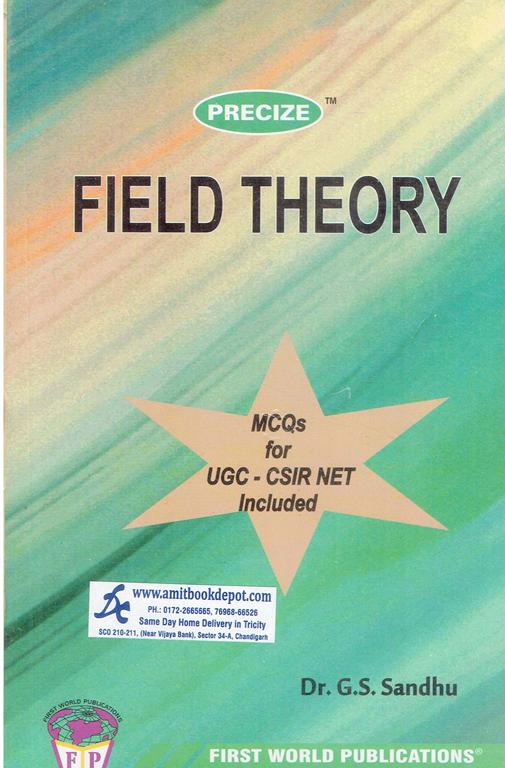
Yes, it is designed as a comprehensive resource. It covers the entire theory through detailed MCQs, making it a primary tool for NET preparation. However, for deeper theoretical proofs, you may want to supplement it with a standard textbook.
The book's table of contents and chapters are directly structured around the units of MATH-617S. It covers all topics mentioned in the syllabus, including Prime Fields, Algebraic Closures, Perfect Fields, and the Fundamental Theorem of Galois Theory.
Absolutely. The topics covered—Field Extensions, Galois Theory, and their applications—are standard in most MSc Mathematics programs globally and are a crucial part of the CSIR NET syllabus.
Yes, Chapter 4 is dedicated entirely to the applications, including solvability by radicals and the constructibility of regular polygons, as required by both the NET syllabus and the Panjab University curriculum.
The MCQs are perfect for self-testing and reinforcing concepts, which is essential for performing well in internal quizzes, tests, and the short-answer-type compulsory question in the final exam.
Yes, Finite Fields are covered under the Unit I topics in the syllabus, which is addressed in the corresponding chapters of the book.
Yes, completely. The core Field Theory syllabus for competitive exams like UGC NET and CSIR NET overlaps significantly with advanced university curricula. This alignment ensures you are studying the correct depth and breadth of topics.
Yes, the language is clear and concise, aimed at facilitating self-study. The presentation is logical, moving from basic preliminaries to complex applications.
While GATE also tests Field Theory, its question pattern differs. This book is highly beneficial for building conceptual strength, but you should also practice with GATE-specific question formats.
While the primary focus is on MCQs, the "Preliminaries" chapter and the logical flow of questions within each topic are designed to build conceptual understanding, effectively serving as a guided review.
No Description Added
Yes, it is designed as a comprehensive resource. It covers the entire theory through detailed MCQs, making it a primary tool for NET preparation. However, for deeper theoretical proofs, you may want to supplement it with a standard textbook.
The book's table of contents and chapters are directly structured around the units of MATH-617S. It covers all topics mentioned in the syllabus, including Prime Fields, Algebraic Closures, Perfect Fields, and the Fundamental Theorem of Galois Theory.
Absolutely. The topics covered—Field Extensions, Galois Theory, and their applications—are standard in most MSc Mathematics programs globally and are a crucial part of the CSIR NET syllabus.
Yes, Chapter 4 is dedicated entirely to the applications, including solvability by radicals and the constructibility of regular polygons, as required by both the NET syllabus and the Panjab University curriculum.
The MCQs are perfect for self-testing and reinforcing concepts, which is essential for performing well in internal quizzes, tests, and the short-answer-type compulsory question in the final exam.
Yes, Finite Fields are covered under the Unit I topics in the syllabus, which is addressed in the corresponding chapters of the book.
Yes, completely. The core Field Theory syllabus for competitive exams like UGC NET and CSIR NET overlaps significantly with advanced university curricula. This alignment ensures you are studying the correct depth and breadth of topics.
Yes, the language is clear and concise, aimed at facilitating self-study. The presentation is logical, moving from basic preliminaries to complex applications.
While GATE also tests Field Theory, its question pattern differs. This book is highly beneficial for building conceptual strength, but you should also practice with GATE-specific question formats.
While the primary focus is on MCQs, the "Preliminaries" chapter and the logical flow of questions within each topic are designed to build conceptual understanding, effectively serving as a guided review.