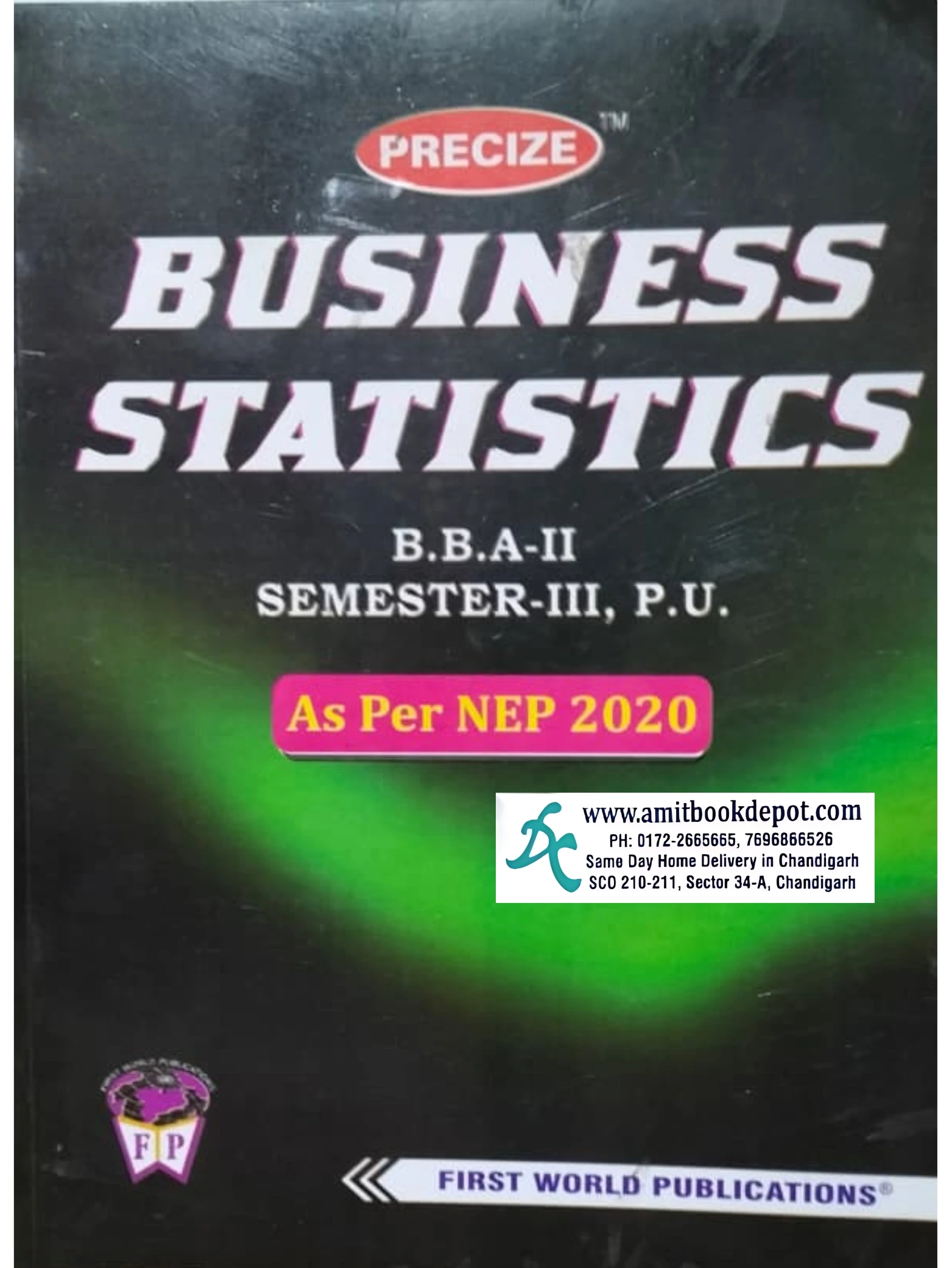
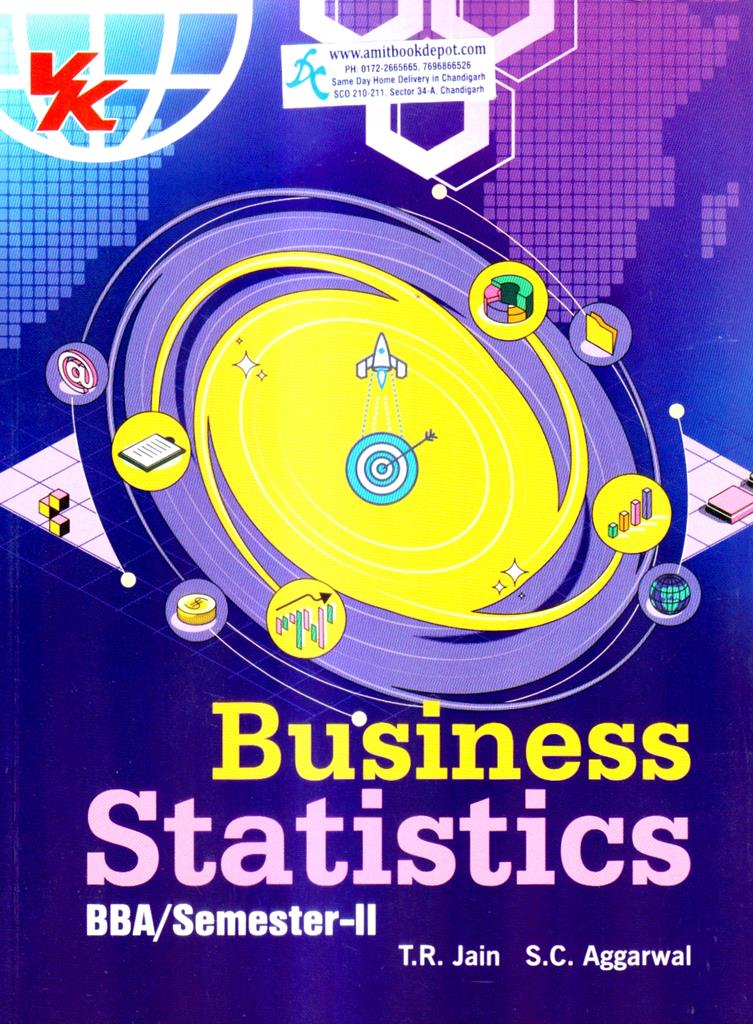
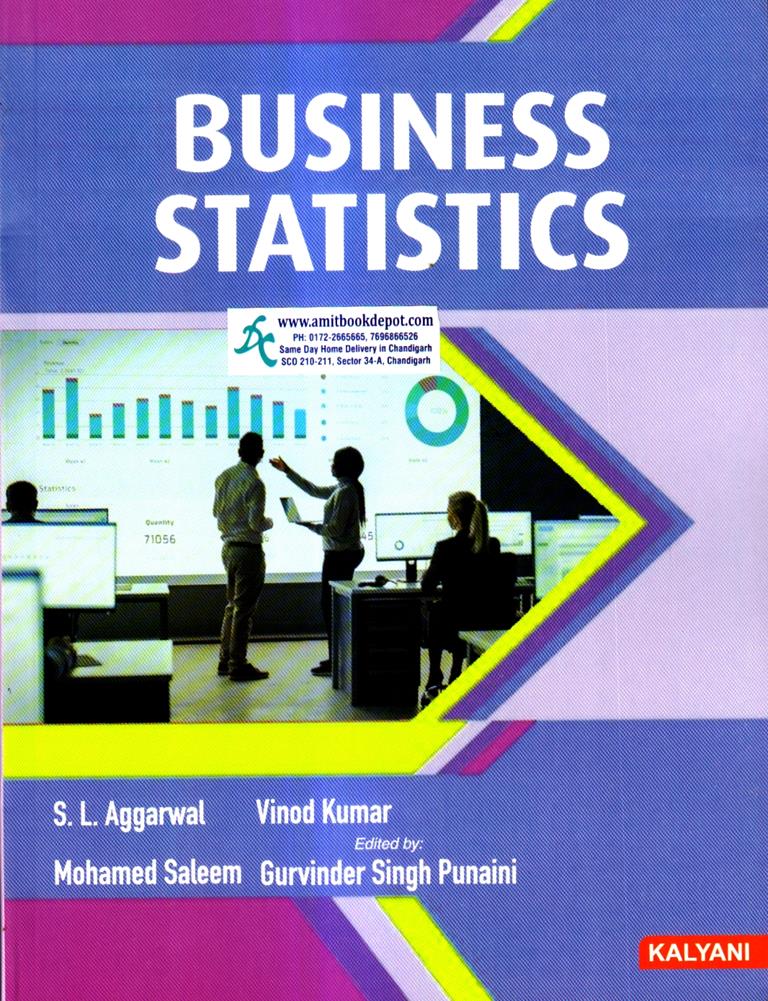
Yes, this book is meticulously crafted to be 100% compliant with the latest syllabus prescribed under the New Education Policy (NEP) for Business Statistics (Semester-III) at Panjab University, Chandigarh.
Absolutely. The book's table of contents and chapters are organized to cover all topics from both units in their entirety, from Basic Statistics to Time Series Analysis.
The content is structured to provide the depth required for the 80-mark external exam and includes conceptual clarity that aids in performing well in internal assessments, projects, and viva voce.
Yes, the book places a strong emphasis on numerical problem-solving, with step-by-step solutions for methods like Karl Pearson's correlation, rank correlation, and simple linear regression.
Yes, the book comprehensively covers the methods of constructing Index Numbers, including the Simple Aggregative Method, Average of Relatives, and the weighted methods of Laspeyres, Paasche, and Fisher's Ideal Index.
It covers all types, including the calculation of Simple Arithmetic Mean, Weighted Arithmetic Mean, Median, Mode, as well as Harmonic and Geometric Mean.
This book is unique because it is not a generic statistics book. It is specifically tailored to the Panjab University BBA syllabus, its exam pattern, and its marking scheme, making it highly focused and efficient for exam preparation.
Yes, by covering areas like Index Numbers for economics, Time Series for forecasting, and Correlation/Regression for data analysis, the book consistently links statistical methods to their real-world business applications.
Yes, Chapter 1 on Introduction to Statistics covers the definition, functions, scope, usage, and limitations of statistics in detail.
Yes, it is designed to be a comprehensive and self-contained primary textbook that covers the entire syllabus, reducing the need for multiple reference guides.
No Description Added
Yes, this book is meticulously crafted to be 100% compliant with the latest syllabus prescribed under the New Education Policy (NEP) for Business Statistics (Semester-III) at Panjab University, Chandigarh.
Absolutely. The book's table of contents and chapters are organized to cover all topics from both units in their entirety, from Basic Statistics to Time Series Analysis.
The content is structured to provide the depth required for the 80-mark external exam and includes conceptual clarity that aids in performing well in internal assessments, projects, and viva voce.
Yes, the book places a strong emphasis on numerical problem-solving, with step-by-step solutions for methods like Karl Pearson's correlation, rank correlation, and simple linear regression.
Yes, the book comprehensively covers the methods of constructing Index Numbers, including the Simple Aggregative Method, Average of Relatives, and the weighted methods of Laspeyres, Paasche, and Fisher's Ideal Index.
It covers all types, including the calculation of Simple Arithmetic Mean, Weighted Arithmetic Mean, Median, Mode, as well as Harmonic and Geometric Mean.
This book is unique because it is not a generic statistics book. It is specifically tailored to the Panjab University BBA syllabus, its exam pattern, and its marking scheme, making it highly focused and efficient for exam preparation.
Yes, by covering areas like Index Numbers for economics, Time Series for forecasting, and Correlation/Regression for data analysis, the book consistently links statistical methods to their real-world business applications.
Yes, Chapter 1 on Introduction to Statistics covers the definition, functions, scope, usage, and limitations of statistics in detail.
Yes, it is designed to be a comprehensive and self-contained primary textbook that covers the entire syllabus, reducing the need for multiple reference guides.