Categories
College Bookssss >
BA PU Chandigarh
BSC PU Chandigarh
MSC PU Chandigarh
BBA PU Chandigarh
MA PU Chandigarh
Medical Books
Engineering Books
Management Books
PGDCA Books
BCOM PU Chandigarh
MCOM PU Chandigarh
BCA PU Chandigarh
MCA PU Chandigarh
animate-books

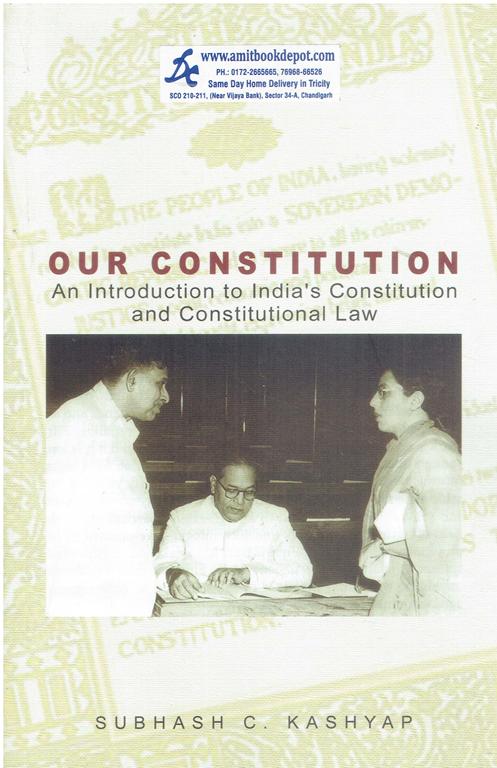
OUR CONSTITUTION An Introduction to India's Constitution and Constitutional Law

by Madhurima
₹295 ₹310.00(-/ off)

Rating & Reviews

23 Customer Review

OUR CONSTITUTION, by Dr. Subhash C. Kashyap, published by the National Book Trust, is the authoritative guide to India's Constitution. This comprehensive book offers a clear introduction to constitutional history, fundamental rights, directive principles, duties, and the structure of government—including the executive, legislature, and judiciary. Covering essential topics like amendments, emergency provisions, elections, and Panchayati Raj, it is an indispensable resource for UPSC aspirants, law students, and informed citizens. Written with clarity and depth, it demystifies complex constitutional law, making it the perfect reference for understanding the framework of the world's largest democracy.
Have Doubts Regarding This Product ? Ask Your Question

  • Q1
    Is this book suitable for someone with no prior legal background?
    A1

    Absolutely. Dr. Kashyap has written this book as an introduction, specifically to make the Indian Constitution accessible to students, beginners, and general readers without requiring prior legal knowledge.

  • Q2
    Is this book sufficient for UPSC Civil Services Examination (Polity and Governance)?
    A2

    Yes, it is considered a classic and highly reliable foundational text for the Indian Polity section of the UPSC Prelims and Mains. Many aspirants and toppers use it as a core reference alongside current affairs updates.

  • Q3
    Does it cover the Preamble and Fundamental Duties in detail?
    A3

    Yes, there are dedicated, in-depth chapters on 'The Preamble' (Chapter 5) and 'Fundamental Duties' (Chapter 10), analyzing their meaning, evolution, and significance.

  • Q4
    Are topics like Judicial Review and Basic Structure Doctrine explained?
    A4

    Yes, these critical concepts are explained within the relevant chapters, particularly in the context of Fundamental Rights (Chapter 8) and the Amendment of the Constitution (Chapter 21).

  • Q5
    Is there coverage of Centre-State relations and recent issues like GST?
    A5

    The book has a dedicated chapter on 'Union-State Relations' (Chapter 15). However, as GST was implemented post-2009, its specific constitutional framework (101st Amendment) is not covered in this edition.

  • Q6
    Are the Emergency Provisions (National, State, Financial) explained with examples?
    A6

    Yes, Chapter 17 on 'Emergency Provisions' provides a comprehensive explanation of all three types of emergencies, their procedural aspects, and their historical context.

  • Q7
    Is there a comparison of the Indian Constitution with other constitutions like the US or UK?
    A7

    While the primary focus is on the Indian Constitution, the chapter on 'Salient Features' (Chapter 4) does draw comparative references to highlight the unique and borrowed aspects of the Indian document.

  • Q8
    How useful is the Annexure on Constitutional Amendments?
    A8

    The Annexure is extremely valuable for quick reference, as it lists all amendments sequentially from 1950 to 2009, mentioning the year and the key changes introduced by each.

  • Q9
    Is this book recommended for law school students (LL.B. first year)?
    A9

    Yes, it is a highly recommended introductory text for the Constitution Law paper in LL.B. programs, providing a solid conceptual foundation before delving into more extensive case law commentaries.

  • Q10
    Are landmark Supreme Court judgments referenced in the book?
    A10

    The book discusses the constitutional principles established by landmark judgments (like Kesavananda Bharati) within the relevant chapters. However, it is not a case-law-centric book; its strength is in explaining the Constitution's articles and structure.


0.00

0 Overall Rating
  • 5
    0
  • 4
    0
  • 3
    0
  • 2
    0
  • 1
    0

Try this product & share your review & thoughts

1. Introduction
2. Constitutional History
3. Making of the Constitution
4. Salient Features of the Constitution
5. The Preamble
6. The Union and Its Territory
7. Citizenship
8. Fundamental Rights
9. Directive Principles
10. Fundamental Duties
11. The Union Executive
12. The Union Legislature
13. The Judiciary
14. The States and Union Territories
15. Union-State Relations
16. Financial Provisions, Trade, etc.
17. Emergency Provisions
18. Services under the Union and the States
19. Elections
20. Language Provisions
21. Amendment of the Constitution
22. Panchayati Raj
23. Miscellaneous, Temporary, and Special Provisions
24. Working of the Constitution
25. National Commission to Review the Working of the Constitution: An Evaluation

Annexure: Table of Constitutional Amendments (1950-2009)
Index

OUR CONSTITUTION: An Introduction to India's Constitution and Constitutional Law by the eminent constitutional expert and former Secretary-General of the Lok Sabha, Dr. Subhash C. Kashyap, is the definitive introductory guide to the foundational legal document of the world's largest democracy. Published by the National Book Trust, this authoritative volume serves as an indispensable resource for students of political science, law aspirants, civil service candidates, legal professionals, educators, and every informed citizen seeking a deep and clear understanding of the framework that governs India.

This comprehensive book meticulously unravels the intricacies of the Indian Constitution, beginning with its rich historical context. It traces the constitutional history from colonial times through the making of the Constitution by the Constituent Assembly, providing essential background for appreciating its visionary nature. Dr. Kashyap expertly breaks down the salient features of the Constitution, highlighting its unique character as a sovereign, socialist, secular, democratic republic.

A cornerstone of this work is its detailed analysis of the Constitution's core components. The book dedicates entire chapters to the profound Preamble, which encapsulates the ideals and aspirations of the nation. It offers an exhaustive examination of Fundamental Rights, the bulwark of Indian citizens' liberties, balancing them with the socio-economic goals outlined in the Directive Principles of State Policy and the moral obligations enshrined as Fundamental Duties. This tripartite analysis is crucial for understanding the rights and responsibilities of citizenship.

The book provides a clear and systematic overview of the structure and functions of the Indian government. The chapters on the Union Executive (President, Vice-President, Prime Minister, Council of Ministers), the Union Legislature (Parliament: Lok Sabha and Rajya Sabha), and the Judiciary (Supreme Court, High Courts) explain the separation of powers and the system of checks and balances. It further elucidates the federal structure through chapters on the states, union territories, and union-state relations, clarifying the distribution of legislative and administrative powers.

Understanding the Constitution requires knowledge of its operational and protective mechanisms. This volume covers critical aspects such as the amendment of the Constitution, detailing the process that allows it to be a living document. It explains the extraordinary emergency provisions that can be invoked during crises. Other vital topics include elections, financial provisions, services under the Union and the states, and language provisions, offering a 360-degree view of constitutional governance.

Keeping pace with India's evolving polity, the book includes dedicated chapters on Panchayati Raj and local self-governance, reflecting the 73rd and 74th Constitutional Amendments. It concludes with a reflective analysis of the working of the Constitution and an evaluation of the National Commission to Review the Working of the Constitution, prompting readers to think about its future. A highly valuable annexure provides a detailed table of constitutional amendments from 1950 to 2009, serving as a quick reference for researchers.

Written in Dr. Kashyap's hallmark lucid and precise style, this book demystifies complex legal concepts without oversimplifying them. Its logical progression from history to core principles, organs of the state, and special provisions makes it an ideal book and reference guide. Whether you are preparing for competitive exams like UPSC, CLAT, or university examinations, engaging in legal scholarship, or simply wishing to be a more aware citizen, OUR CONSTITUTION is the most trusted companion to navigate the grand architecture of India's constitutional law. This edition stands as a timeless classic, empowering readers with knowledge of the supreme law that shapes the nation's destiny.

1. Introduction
2. Constitutional History
3. Making of the Constitution
4. Salient Features of the Constitution
5. The Preamble
6. The Union and Its Territory
7. Citizenship
8. Fundamental Rights
9. Directive Principles
10. Fundamental Duties
11. The Union Executive
12. The Union Legislature
13. The Judiciary
14. The States and Union Territories
15. Union-State Relations
16. Financial Provisions, Trade, etc.
17. Emergency Provisions
18. Services under the Union and the States
19. Elections
20. Language Provisions
21. Amendment of the Constitution
22. Panchayati Raj
23. Miscellaneous, Temporary, and Special Provisions
24. Working of the Constitution
25. National Commission to Review the Working of the Constitution: An Evaluation

Annexure: Table of Constitutional Amendments (1950-2009)
Index

Have Doubts Regarding This Product ? Ask Your Question

  • Q1
    Is this book suitable for someone with no prior legal background?
    A1

    Absolutely. Dr. Kashyap has written this book as an introduction, specifically to make the Indian Constitution accessible to students, beginners, and general readers without requiring prior legal knowledge.

  • Q2
    Is this book sufficient for UPSC Civil Services Examination (Polity and Governance)?
    A2

    Yes, it is considered a classic and highly reliable foundational text for the Indian Polity section of the UPSC Prelims and Mains. Many aspirants and toppers use it as a core reference alongside current affairs updates.

  • Q3
    Does it cover the Preamble and Fundamental Duties in detail?
    A3

    Yes, there are dedicated, in-depth chapters on 'The Preamble' (Chapter 5) and 'Fundamental Duties' (Chapter 10), analyzing their meaning, evolution, and significance.

  • Q4
    Are topics like Judicial Review and Basic Structure Doctrine explained?
    A4

    Yes, these critical concepts are explained within the relevant chapters, particularly in the context of Fundamental Rights (Chapter 8) and the Amendment of the Constitution (Chapter 21).

  • Q5
    Is there coverage of Centre-State relations and recent issues like GST?
    A5

    The book has a dedicated chapter on 'Union-State Relations' (Chapter 15). However, as GST was implemented post-2009, its specific constitutional framework (101st Amendment) is not covered in this edition.

  • Q6
    Are the Emergency Provisions (National, State, Financial) explained with examples?
    A6

    Yes, Chapter 17 on 'Emergency Provisions' provides a comprehensive explanation of all three types of emergencies, their procedural aspects, and their historical context.

  • Q7
    Is there a comparison of the Indian Constitution with other constitutions like the US or UK?
    A7

    While the primary focus is on the Indian Constitution, the chapter on 'Salient Features' (Chapter 4) does draw comparative references to highlight the unique and borrowed aspects of the Indian document.

  • Q8
    How useful is the Annexure on Constitutional Amendments?
    A8

    The Annexure is extremely valuable for quick reference, as it lists all amendments sequentially from 1950 to 2009, mentioning the year and the key changes introduced by each.

  • Q9
    Is this book recommended for law school students (LL.B. first year)?
    A9

    Yes, it is a highly recommended introductory text for the Constitution Law paper in LL.B. programs, providing a solid conceptual foundation before delving into more extensive case law commentaries.

  • Q10
    Are landmark Supreme Court judgments referenced in the book?
    A10

    The book discusses the constitutional principles established by landmark judgments (like Kesavananda Bharati) within the relevant chapters. However, it is not a case-law-centric book; its strength is in explaining the Constitution's articles and structure.

No Syllabus Added

0.00

0 Overall Rating
  • 5
    0
  • 4
    0
  • 3
    0
  • 2
    0
  • 1
    0

Try this product & share your review & thoughts

Top Trending Product

Related Product

Related Product

Related Blog Posts

Latest Blogs

Latest Blogs

blog-img
Classic Literature Reimagined: Discuss modern twists on classic novels.
Lorem ipsum dolor sit amet, consectetur adipiscing elit, sed do eiusmod tempor incididunt ut labore et dolore magna aliqua. Ut enim ad minim veniam, quis nostrud exercitation ullamco Lorem ipsum dolor sit amet, consectetur adipiscing elit, sed do eiusmod tempor incididunt ut labore et dolore magna aliqua. Utenim ad minim veniam, quis nostrud exercitation ullamco Lorem ipsum dolor sit amet, consecte...
Read more
Author name | 10 jan, 2025
blog-img
Classic Literature Reimagined: Discuss modern twists on classic novels.
Lorem ipsum dolor sit amet, consectetur adipiscing elit, sed do eiusmod tempor incididunt ut labore et dolore magna aliqua. Ut enim ad minim veniam, quis nostrud exercitation ullamco Lorem ipsum dolor sit amet, consectetur adipiscing elit, sed do eiusmod tempor incididunt ut labore et dolore magna aliqua. Utenim ad minim veniam, quis nostrud exercitation ullamco Lorem ipsum dolor sit amet, consecte...
Read more
Author name | 10 jan, 2025
blog-img
Classic Literature Reimagined: Discuss modern twists on classic novels.
Lorem ipsum dolor sit amet, consectetur adipiscing elit, sed do eiusmod tempor incididunt ut labore et dolore magna aliqua. Ut enim ad minim veniam, quis nostrud exercitation ullamco Lorem ipsum dolor sit amet, consectetur adipiscing elit, sed do eiusmod tempor incididunt ut labore et dolore magna aliqua. Utenim ad minim veniam, quis nostrud exercitation ullamco Lorem ipsum dolor sit amet, consecte...
Read more
Author name | 10 jan, 2025
blog-img
Classic Literature Reimagined: Discuss modern twists on classic novels.
Lorem ipsum dolor sit amet, consectetur adipiscing elit...
Read more
Author Name | 10 Jan, 2025
blog-img
Classic Literature Reimagined: Discuss modern twists on classic novels.
Lorem ipsum dolor sit amet, consectetur adipiscing elit...
Read more
Author Name | 10 Jan, 2025
blog-img
Classic Literature Reimagined: Discuss modern twists on classic novels.
Lorem ipsum dolor sit amet, consectetur adipiscing elit...
Read more
Author Name | 10 Jan, 2025
blog-img
Classic Literature Reimagined: Discuss modern twists on classic novels.
Lorem ipsum dolor sit amet, consectetur adipiscing elit...
Read more
Author Name | 10 Jan, 2025
blog-img
Classic Literature Reimagined: Discuss modern twists on classic novels.
Lorem ipsum dolor sit amet, consectetur adipiscing elit...
Read more
Author Name | 10 Jan, 2025
blog-img
Classic Literature Reimagined: Discuss modern twists on classic novels.
Lorem ipsum dolor sit amet, consectetur adipiscing elit...
Read more
Author Name | 10 Jan, 2025
blog-img
Classic Literature Reimagined: Discuss modern twists on classic novels.
Lorem ipsum dolor sit amet, consectetur adipiscing elit...
Read more
Author Name | 10 Jan, 2025
blog-img
Classic Literature Reimagined: Discuss modern twists on classic novels.
Lorem ipsum dolor sit amet, consectetur adipiscing elit...
Read more
Author Name | 10 Jan, 2025
blog-img
Classic Literature Reimagined: Discuss modern twists on classic novels.
Lorem ipsum dolor sit amet, consectetur adipiscing elit...
Read more
Author Name | 10 Jan, 2025