-
Mon-Fri: 10AM to 8PM 01722665665
-
My Account
-
-
23
Total :
₹ 6,154.80

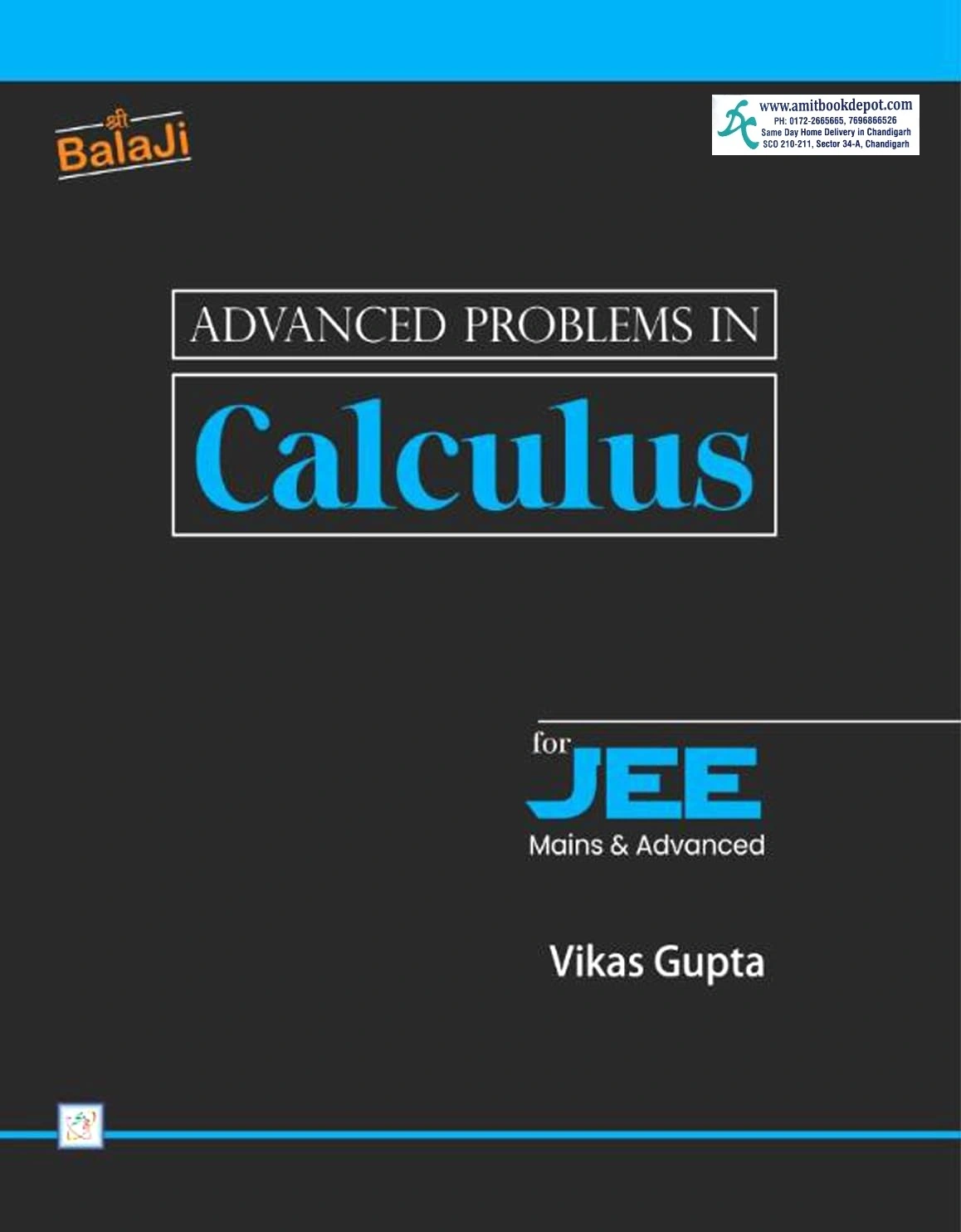

Yes. Each chapter has graded problems ranging from JEE Main to Advanced, including single-correct, multiple-correct, and numerical type questions.
Yes. Step-by-step solutions are included for complex problems, emphasizing shortcuts and alternate methods for faster calculation.
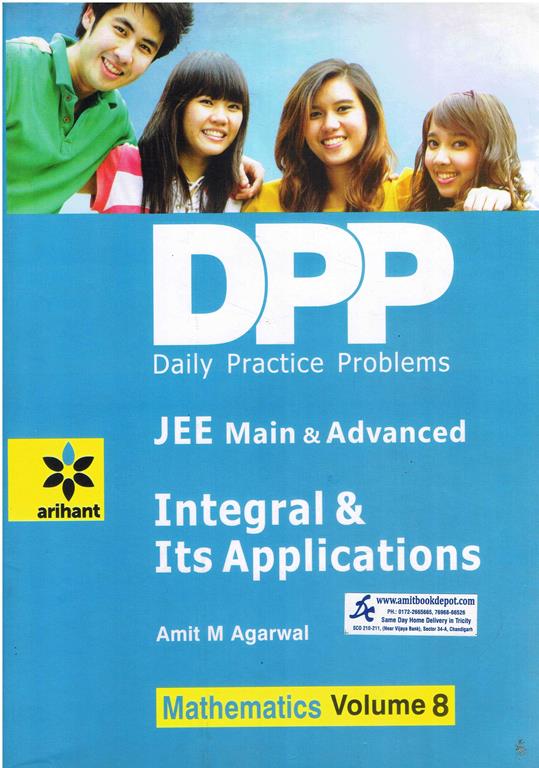
Yes, Chapter 9 is exclusively dedicated to Area Under the Curve, covering standard curves, modulus functions, and region-based problems.
Yes. Chapter 2 covers Inverse Trigonometric Functions, focusing on domain, range, and composite function problems.
Yes. Chapter 8 combines Indefinite and Definite Integration to show connections between antiderivatives, limits of sums, and properties.
Yes. Chapter 10 includes variable separable, homogeneous, linear DEs, and application-based problems like growth/decay and orthogonal trajectories.
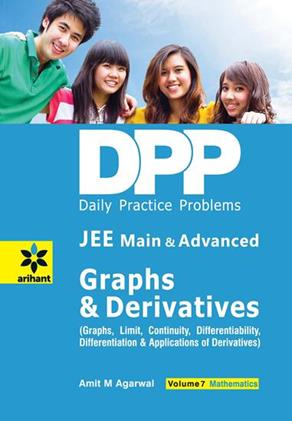
Yes. Chapter 7 (Application of Derivatives) includes rigorous problems on LMVT, Rolle’s theorem, monotonicity, and maxima-minima.
Yes. Chapter 4 (Continuity) and Chapter 5 (Differentiability) are separate, with problems on removable discontinuity and non-differentiability points.
Yes. Chapter 6 includes differentiation of implicit, parametric, logarithmic, and higher-order derivatives with JEE-level complexity.
Yes. Chapter 3 (Limits) has problems on indeterminate forms, L’Hôpital’s rule, and expansions like Taylor and binomial.
No Description Added
Yes. Each chapter has graded problems ranging from JEE Main to Advanced, including single-correct, multiple-correct, and numerical type questions.
Yes. Step-by-step solutions are included for complex problems, emphasizing shortcuts and alternate methods for faster calculation.
Yes, Chapter 9 is exclusively dedicated to Area Under the Curve, covering standard curves, modulus functions, and region-based problems.
Yes. Chapter 2 covers Inverse Trigonometric Functions, focusing on domain, range, and composite function problems.
Yes. Chapter 8 combines Indefinite and Definite Integration to show connections between antiderivatives, limits of sums, and properties.
Yes. Chapter 10 includes variable separable, homogeneous, linear DEs, and application-based problems like growth/decay and orthogonal trajectories.
Yes. Chapter 7 (Application of Derivatives) includes rigorous problems on LMVT, Rolle’s theorem, monotonicity, and maxima-minima.
Yes. Chapter 4 (Continuity) and Chapter 5 (Differentiability) are separate, with problems on removable discontinuity and non-differentiability points.
Yes. Chapter 6 includes differentiation of implicit, parametric, logarithmic, and higher-order derivatives with JEE-level complexity.
Yes. Chapter 3 (Limits) has problems on indeterminate forms, L’Hôpital’s rule, and expansions like Taylor and binomial.








.jpg)