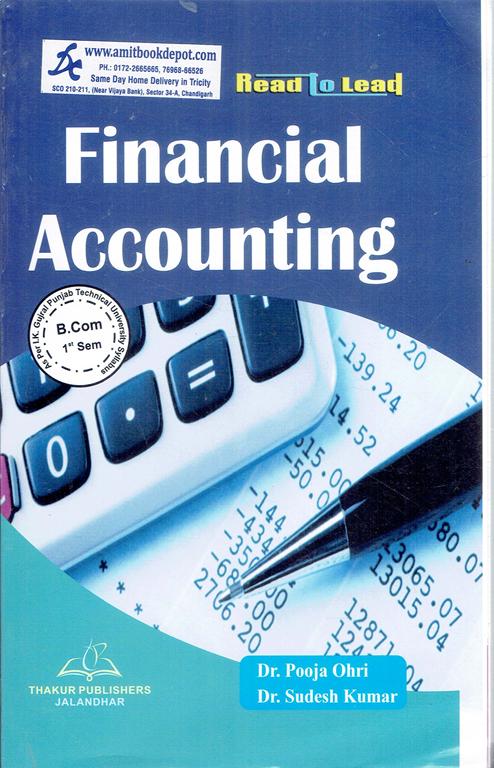
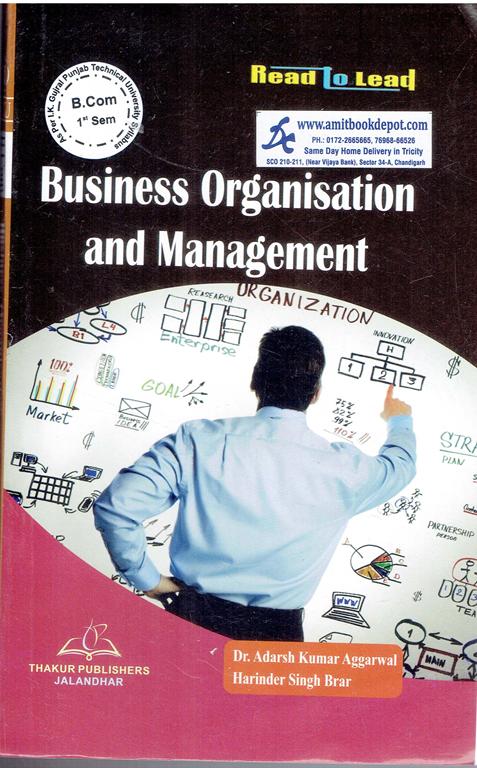
Thakur Financial Accounting BCOM 1st Sem PTU (NEW)
Thakur Financial Accounting BCOM 1st Sem PTU (NEW)
by Madhurima
₹230₹230.00(-/
off)
Rating & Reviews
23 Customer Review
Thakur Financial Accounting for BCOM 1st Semester PTU is the definitive book tailored to the BCOM 102-18 syllabus. This comprehensive guide by Thakur Publishers provides a solid foundation in accounting basics, the accounting cycle, and financial statements for sole proprietors and partnership firms. It offers in-depth coverage of advanced topics like Joint Venture Accounts, Royalty Accounts, Consignment Accounts, Voyage Accounts, Departmental Accounts, and Branch Accounts. With clear explanations, practical examples, and chapter-end exercises, this book is an essential resource for PTU students to master financial accounting concepts and excel in their semester examinations.
Thakur Financial Accounting for BCOM 1st Semester PTU is a meticulously crafted book designed specifically for students pursuing a Bachelor of Commerce from Punjab Technical University (PTU). Authored by V and published by Thakur Publishers, this comprehensive guide serves as the definitive resource for mastering the foundational principles and advanced topics outlined in the BCOM 102-18 FINANCIAL ACCOUNTING syllabus. It is engineered to build a strong conceptual understanding and develop practical accounting skills essential for academic success and a future in commerce.
The book begins with a robust foundation in UNIT-I, dedicated to the Basics of Accounting. It clearly distinguishes between accounting, accountancy, and bookkeeping, ensuring students grasp the fundamental distinctions from the start. The core of financial accounting is explained through detailed chapters on the accounting equation and the complete accounting cycle, which includes step-by-step guidance on journal entries, posting to the ledger, and preparing a trial balance. A thorough exploration of accounting principles (GAAP), including fundamental accounting concepts and conventions, provides the necessary theoretical framework. This unit is crucial for clarifying the nature of expenditure and receipts, differentiating between capital, revenue, and deferred revenue. It culminates with an in-depth, practical approach to preparing financial statements of sole proprietors and partnership firms, complete with adjustment entries for the trading account, profit & loss account, and balance sheet.
Progressing to UNIT-II, the book delves into more complex business arrangements. It offers a clear and concise explanation of joint ventures, detailing their meaning, types, and the various methods for profit determination. The Royalty Accounts chapter demystifies the accounting treatment for royalties, a key area in industries like publishing and mining. Furthermore, the Consignment Accounts section is treated with exceptional clarity, covering features, the consignee’s commission, and the preparation of Account Sales. A distinct comparison between joint venture and consignment helps students avoid common confusions, and the accounting treatment in the books of both the consignor and consignee is illustrated with precision.
UNIT-III expands the student's horizon to specialized accounting systems. The Voyage Accounts chapter adeptly handles the accounting procedures for both complete and incomplete voyages, a niche but important area. The Departmental Accounts section is structured to highlight its objects and advantages, guiding students through the accounting procedure, the apportionment of expenses and incomes, and the critical handling of Interdepartmental Transfers and Provision for Unrealized Profit.
Finally, UNIT-IV provides an exhaustive study of Branch Accounts. It systematically explains the features, objects, and types of branches, with a focused approach on dependent and independent branches. The book elaborates on the different account systems, including the Stock and Debtors System, and provides a clear methodology for the preparation of the Consolidated Profit and Loss Account and Balance Sheet for the entire business entity.
Key features of this PTU-specific book:
1. Strict Syllabus Alignment: Fully covers the prescribed BCOM 1st Sem PTU syllabus (BCOM 102-18).
2. Structured Chapter Flow: Each chapter logically progresses from concepts to practical application.
3. Comprehensive Exercises: Every chapter concludes with a dedicated exercise section containing problems and questions for self-assessment and exam preparation.
4. Clarity in Complex Topics: Simplifies advanced topics like consignment, joint venture, and branch accounts with systematic explanations and illustrative examples.
5. Examination-Oriented Approach: The content is tailored to help students answer both theoretical and practical questions effectively in their university examinations.
This book is an indispensable tool for any BCOM first-year student at PTU. It is more than just a book; it is a complete learning companion that builds confidence and ensures a thorough command of financial accounting.
Is this book strictly aligned with the latest PTU BCOM 1st Semester syllabus?
A1
Yes, this book is meticulously crafted to cover 100% of the BCOM 102-18 FINANCIAL ACCOUNTING syllabus for Punjab Technical University.
Q2
Does the book include practical problems and exercises for self-practice?
A2
Absolutely. Each chapter concludes with a dedicated "Exercise" section containing problems and questions to reinforce learning and aid in exam preparation.
Q3
How does this book explain the difference between Joint Venture and Consignment?
A3
The book provides a dedicated section that clearly outlines the distinctions between Joint Venture and Consignment, which is a common area of confusion for students.
Q4
Are the Financial Statements explained with adjustment entries?
A4
Yes, Unit-I has a specific section on "Adjustment Entries" that explains how to incorporate various adjustments while preparing the final Financial Statements.
Q5
Does the book cover both Dependent and Independent Branch Accounts?
A5
Yes, Unit-IV on Branch Accounts provides separate, detailed coverage for both Dependent and Independent Branches, including the Stock and Debtors System.
Q6
I struggle with Accounting Concepts and Conventions. Is it explained clearly in this book?
A6
Yes, Chapter 1 provides a dedicated and simplified explanation of Accounting Principles (GAAP), Concepts, and Conventions, forming a strong theoretical base.
Q7
Is the accounting treatment for incomplete voyages covered in the Voyage Accounts chapter?
A7
Yes, the chapter on Voyage Accounts specifically covers the accounting treatment for both complete and incomplete voyages.
Q8
Is the Royalty Accounts chapter relevant for modern business scenarios?
A8
Yes, understanding Royalty Accounts is essential for industries like mining, publishing, and franchising, and the book provides a clear accounting treatment for such transactions.
Q9
Does the book help in preparing a Consolidated Balance Sheet for a business with branches?
A9
Yes, the Branch Accounts unit specifically guides the preparation of a Consolidated Profit and Loss Account and Balance Sheet.
Q10
Does the Departmental Accounts chapter explain how to handle inter-departmental transfers?
A10
Yes, it covers the accounting procedure for Interdepartmental Transfers, including the crucial Provision for Unrealized Profit.
0.00
0 Overall Rating
5
0
4
0
3
0
2
0
1
0
Try this product & share your review &
thoughts
UNIT - I
Chapter 1: Basics of Accounting
1. Introduction to Financial Accounting
2. Accounting Principles/GAAP
3. Accounting Concepts
4. Accounting Conventions
5. Accounting Equation
6. Accounting Cycle
7. Journal
8. Subsidiary Books
9. Ledger
10. Trial Balance
11. Exercise
Chapter 2: Expenditure and Receipts
1. Expenditure and Receipts
2. Exercise
Chapter 3: Financial Statements of Sole Proprietors and Partnership Firms
1. Financial Statements of Sole Proprietor
2. Trading Account
3. Income Statement/Profit & Loss Account
4. Balance Sheet
5. Adjustment Entries
6. Financial Statement of Partnership Firm
7. Exercise
UNIT - II
Chapter 4: Joint Venture
1. Joint Venture
2. Exercise
Chapter 5: Royalty Accounts
1. Royalty Accounts
2. Accounting Treatment of Royalties Accounts
3. Exercise
Chapter 6: Consignment Accounts
1. Consignment Accounts
2. Accounting Treatment/Entries of Consignment
3. Miscellaneous Problems
4. Exercise
UNIT - III
Chapter 7: Voyage Accounts
1. Voyage Accounts
2. Exercise
Chapter 8: Departmental Accounts
1. Departmental Accounts
2. Exercise
UNIT - IV
Chapter 9: Branch Accounts
1. Branch Accounts
2. Dependent Branches
3. Independent Branch
4. Incorporation of Branch Trial Balance in Head Office Books
5. Exercise
BCOM 102-18 FINANCIAL ACCOUNTING
Objective: The aim of the course is to familiarize students with basic concepts and principles of accounting and different types of accounts in business.
UNIT-I
Basics of Accounting: Accounting, Accountancy, and Bookkeeping, Accounting Equation,
Accounting Cycle: Journal, Ledger, and Trial Balance; Subsidiary Books, Introduction to financial accounting—meaning, nature, scope, objectives, and limitations. Accounting concepts and conventions (GAAP), Capital, revenue, and deferred revenue expenditure and receipts—financial statements of sole proprietor and partnership firm (with adjustments): Income Statement, Balance Sheet
UNIT-II
Joint Venture—Meaning, types, and determination of profits under different methods. Royalty Accounts, Consignment Accounts—Meaning, features, consignee’s commission, account sales, distinction between joint venture & consignment, accounting treatment in the books of consignor & consignee.
UNIT-III
Voyage Accounts—Meaning, accounting treatment in case of complete voyage & incomplete voyage; Departmental Accounts—Meaning, Objects, Advantages, Accounting Procedure, Apportionment of Expenses and Incomes, Interdepartmental Transfers, and Provision for Unrealized Profit.
UNIT-IV
Branch Accounts—Features—Objects—Types of Branches—Dependent and Independent Branches (Excluding Foreign Branches)—Account Systems—Stock and Debtors System—Preparation of Consolidated Profit and Loss Account and Balance Sheet.
Thakur Financial Accounting for BCOM 1st Semester PTU is a meticulously crafted book designed specifically for students pursuing a Bachelor of Commerce from Punjab Technical University (PTU). Authored by V and published by Thakur Publishers, this comprehensive guide serves as the definitive resource for mastering the foundational principles and advanced topics outlined in the BCOM 102-18 FINANCIAL ACCOUNTING syllabus. It is engineered to build a strong conceptual understanding and develop practical accounting skills essential for academic success and a future in commerce.
The book begins with a robust foundation in UNIT-I, dedicated to the Basics of Accounting. It clearly distinguishes between accounting, accountancy, and bookkeeping, ensuring students grasp the fundamental distinctions from the start. The core of financial accounting is explained through detailed chapters on the accounting equation and the complete accounting cycle, which includes step-by-step guidance on journal entries, posting to the ledger, and preparing a trial balance. A thorough exploration of accounting principles (GAAP), including fundamental accounting concepts and conventions, provides the necessary theoretical framework. This unit is crucial for clarifying the nature of expenditure and receipts, differentiating between capital, revenue, and deferred revenue. It culminates with an in-depth, practical approach to preparing financial statements of sole proprietors and partnership firms, complete with adjustment entries for the trading account, profit & loss account, and balance sheet.
Progressing to UNIT-II, the book delves into more complex business arrangements. It offers a clear and concise explanation of joint ventures, detailing their meaning, types, and the various methods for profit determination. The Royalty Accounts chapter demystifies the accounting treatment for royalties, a key area in industries like publishing and mining. Furthermore, the Consignment Accounts section is treated with exceptional clarity, covering features, the consignee’s commission, and the preparation of Account Sales. A distinct comparison between joint venture and consignment helps students avoid common confusions, and the accounting treatment in the books of both the consignor and consignee is illustrated with precision.
UNIT-III expands the student's horizon to specialized accounting systems. The Voyage Accounts chapter adeptly handles the accounting procedures for both complete and incomplete voyages, a niche but important area. The Departmental Accounts section is structured to highlight its objects and advantages, guiding students through the accounting procedure, the apportionment of expenses and incomes, and the critical handling of Interdepartmental Transfers and Provision for Unrealized Profit.
Finally, UNIT-IV provides an exhaustive study of Branch Accounts. It systematically explains the features, objects, and types of branches, with a focused approach on dependent and independent branches. The book elaborates on the different account systems, including the Stock and Debtors System, and provides a clear methodology for the preparation of the Consolidated Profit and Loss Account and Balance Sheet for the entire business entity.
Key features of this PTU-specific book:
1. Strict Syllabus Alignment: Fully covers the prescribed BCOM 1st Sem PTU syllabus (BCOM 102-18).
2. Structured Chapter Flow: Each chapter logically progresses from concepts to practical application.
3. Comprehensive Exercises: Every chapter concludes with a dedicated exercise section containing problems and questions for self-assessment and exam preparation.
4. Clarity in Complex Topics: Simplifies advanced topics like consignment, joint venture, and branch accounts with systematic explanations and illustrative examples.
5. Examination-Oriented Approach: The content is tailored to help students answer both theoretical and practical questions effectively in their university examinations.
This book is an indispensable tool for any BCOM first-year student at PTU. It is more than just a book; it is a complete learning companion that builds confidence and ensures a thorough command of financial accounting.
UNIT - I
Chapter 1: Basics of Accounting
1. Introduction to Financial Accounting
2. Accounting Principles/GAAP
3. Accounting Concepts
4. Accounting Conventions
5. Accounting Equation
6. Accounting Cycle
7. Journal
8. Subsidiary Books
9. Ledger
10. Trial Balance
11. Exercise
Chapter 2: Expenditure and Receipts
1. Expenditure and Receipts
2. Exercise
Chapter 3: Financial Statements of Sole Proprietors and Partnership Firms
1. Financial Statements of Sole Proprietor
2. Trading Account
3. Income Statement/Profit & Loss Account
4. Balance Sheet
5. Adjustment Entries
6. Financial Statement of Partnership Firm
7. Exercise
UNIT - II
Chapter 4: Joint Venture
1. Joint Venture
2. Exercise
Chapter 5: Royalty Accounts
1. Royalty Accounts
2. Accounting Treatment of Royalties Accounts
3. Exercise
Chapter 6: Consignment Accounts
1. Consignment Accounts
2. Accounting Treatment/Entries of Consignment
3. Miscellaneous Problems
4. Exercise
UNIT - III
Chapter 7: Voyage Accounts
1. Voyage Accounts
2. Exercise
Chapter 8: Departmental Accounts
1. Departmental Accounts
2. Exercise
UNIT - IV
Chapter 9: Branch Accounts
1. Branch Accounts
2. Dependent Branches
3. Independent Branch
4. Incorporation of Branch Trial Balance in Head Office Books
Is this book strictly aligned with the latest PTU BCOM 1st Semester syllabus?
A1
Yes, this book is meticulously crafted to cover 100% of the BCOM 102-18 FINANCIAL ACCOUNTING syllabus for Punjab Technical University.
Q2
Does the book include practical problems and exercises for self-practice?
A2
Absolutely. Each chapter concludes with a dedicated "Exercise" section containing problems and questions to reinforce learning and aid in exam preparation.
Q3
How does this book explain the difference between Joint Venture and Consignment?
A3
The book provides a dedicated section that clearly outlines the distinctions between Joint Venture and Consignment, which is a common area of confusion for students.
Q4
Are the Financial Statements explained with adjustment entries?
A4
Yes, Unit-I has a specific section on "Adjustment Entries" that explains how to incorporate various adjustments while preparing the final Financial Statements.
Q5
Does the book cover both Dependent and Independent Branch Accounts?
A5
Yes, Unit-IV on Branch Accounts provides separate, detailed coverage for both Dependent and Independent Branches, including the Stock and Debtors System.
Q6
I struggle with Accounting Concepts and Conventions. Is it explained clearly in this book?
A6
Yes, Chapter 1 provides a dedicated and simplified explanation of Accounting Principles (GAAP), Concepts, and Conventions, forming a strong theoretical base.
Q7
Is the accounting treatment for incomplete voyages covered in the Voyage Accounts chapter?
A7
Yes, the chapter on Voyage Accounts specifically covers the accounting treatment for both complete and incomplete voyages.
Q8
Is the Royalty Accounts chapter relevant for modern business scenarios?
A8
Yes, understanding Royalty Accounts is essential for industries like mining, publishing, and franchising, and the book provides a clear accounting treatment for such transactions.
Q9
Does the book help in preparing a Consolidated Balance Sheet for a business with branches?
A9
Yes, the Branch Accounts unit specifically guides the preparation of a Consolidated Profit and Loss Account and Balance Sheet.
Q10
Does the Departmental Accounts chapter explain how to handle inter-departmental transfers?
A10
Yes, it covers the accounting procedure for Interdepartmental Transfers, including the crucial Provision for Unrealized Profit.
BCOM 102-18 FINANCIAL ACCOUNTING
Objective: The aim of the course is to familiarize students with basic concepts and principles of accounting and different types of accounts in business.
UNIT-I
Basics of Accounting: Accounting, Accountancy, and Bookkeeping, Accounting Equation,
Accounting Cycle: Journal, Ledger, and Trial Balance; Subsidiary Books, Introduction to financial accounting—meaning, nature, scope, objectives, and limitations. Accounting concepts and conventions (GAAP), Capital, revenue, and deferred revenue expenditure and receipts—financial statements of sole proprietor and partnership firm (with adjustments): Income Statement, Balance Sheet
UNIT-II
Joint Venture—Meaning, types, and determination of profits under different methods. Royalty Accounts, Consignment Accounts—Meaning, features, consignee’s commission, account sales, distinction between joint venture & consignment, accounting treatment in the books of consignor & consignee.
UNIT-III
Voyage Accounts—Meaning, accounting treatment in case of complete voyage & incomplete voyage; Departmental Accounts—Meaning, Objects, Advantages, Accounting Procedure, Apportionment of Expenses and Incomes, Interdepartmental Transfers, and Provision for Unrealized Profit.
UNIT-IV
Branch Accounts—Features—Objects—Types of Branches—Dependent and Independent Branches (Excluding Foreign Branches)—Account Systems—Stock and Debtors System—Preparation of Consolidated Profit and Loss Account and Balance Sheet.
Classic Literature Reimagined: Discuss modern twists on classic novels.
Lorem ipsum dolor sit amet, consectetur adipiscing elit, sed
do
eiusmod tempor incididunt ut labore et dolore magna aliqua. Ut enim ad minim
veniam, quis nostrud exercitation ullamco Lorem ipsum dolor sit amet,
consectetur adipiscing elit, sed do eiusmod tempor incididunt ut labore et
dolore magna aliqua. Utenim ad minim veniam, quis nostrud exercitation
ullamco
Lorem ipsum dolor sit amet, consecte...
Classic Literature Reimagined: Discuss modern twists on classic novels.
Lorem ipsum dolor sit amet, consectetur adipiscing elit, sed
do
eiusmod tempor incididunt ut labore et dolore magna aliqua. Ut enim ad minim
veniam, quis nostrud exercitation ullamco Lorem ipsum dolor sit amet,
consectetur adipiscing elit, sed do eiusmod tempor incididunt ut labore et
dolore magna aliqua. Utenim ad minim veniam, quis nostrud exercitation
ullamco
Lorem ipsum dolor sit amet, consecte...
Classic Literature Reimagined: Discuss modern twists on classic novels.
Lorem ipsum dolor sit amet, consectetur adipiscing elit, sed
do
eiusmod tempor incididunt ut labore et dolore magna aliqua. Ut enim ad minim
veniam, quis nostrud exercitation ullamco Lorem ipsum dolor sit amet,
consectetur adipiscing elit, sed do eiusmod tempor incididunt ut labore et
dolore magna aliqua. Utenim ad minim veniam, quis nostrud exercitation
ullamco
Lorem ipsum dolor sit amet, consecte...