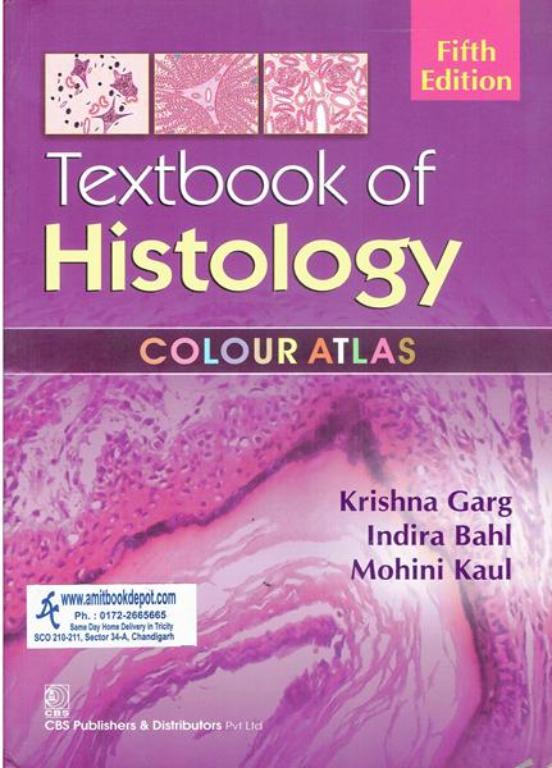
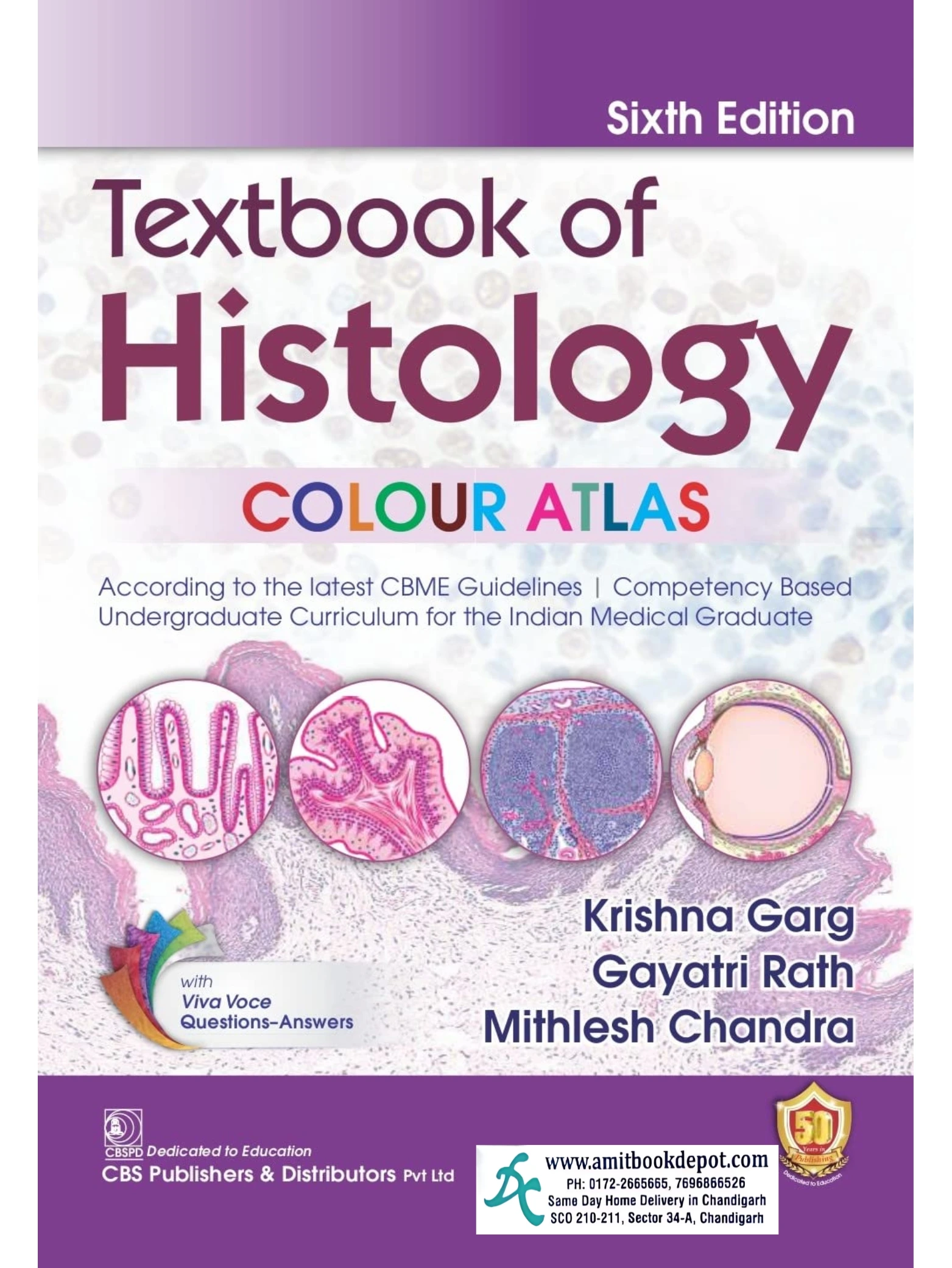
This textbook is a colour atlas, so it places a strong emphasis on high-quality photomicrographs of real human tissues. These are accompanied by detailed explanatory text and labeled diagrams to ensure students can accurately identify structures as they would appear under a microscope .
Yes, absolutely. The book is designed for undergraduate students of medical sciences as well as other similar courses like BDS. Its coverage of oral tissues, including teeth and salivary glands, makes it highly relevant for dental students .
A key feature of this book is the inclusion of "three points of identification" for key micrographs, often presented as "facts to remember." This provides a systematic framework for students to confidently identify and describe slides during practical exams and "spotting" sessions .
Yes, the book includes a dedicated chapter on Histological Techniques. It has been enlarged in this edition to provide a solid introduction to the purpose of fixation, common fixatives, tissue processing (dehydration, clearing), sectioning, and the principles of staining, particularly Haematoxylin-Eosin (H&E) .
Definitely. The book contains numerous comparison tables throughout, such as a comparison of different types of cartilage, a comparison of arteries and veins, and a comparison of the small and large intestines. These tables succinctly summarize key differentiating features for quick revision.
The book provides a holistic understanding by including both functional and applied aspects of tissues. This helps students correlate the structure of a tissue with its function and understand its importance in clinical practice and histopathology .
Yes, the book is designed to provide sufficient material for last-minute revision. The "must know" components, "three points of identification," summary tables, and end-of-chapter MCQs make it an ideal resource for efficient and effective exam preparation .
The book provides comprehensive coverage of the Male Reproductive System in a dedicated chapter, including the microscopic structure of the testis, epididymis, ductus deferens, prostatic gland, seminal vesicle, and penis .
Yes, the book includes a chapter on the Organs of Special Sense, which covers the structure of the eyeball, the internal ear, as well as the tongue and taste buds .
The chapter on glands focuses on the major salivary glands. It provides a detailed description and comparison of the parotid, submandibular, and sublingual glands .
No Description Added
This textbook is a colour atlas, so it places a strong emphasis on high-quality photomicrographs of real human tissues. These are accompanied by detailed explanatory text and labeled diagrams to ensure students can accurately identify structures as they would appear under a microscope .
Yes, absolutely. The book is designed for undergraduate students of medical sciences as well as other similar courses like BDS. Its coverage of oral tissues, including teeth and salivary glands, makes it highly relevant for dental students .
A key feature of this book is the inclusion of "three points of identification" for key micrographs, often presented as "facts to remember." This provides a systematic framework for students to confidently identify and describe slides during practical exams and "spotting" sessions .
Yes, the book includes a dedicated chapter on Histological Techniques. It has been enlarged in this edition to provide a solid introduction to the purpose of fixation, common fixatives, tissue processing (dehydration, clearing), sectioning, and the principles of staining, particularly Haematoxylin-Eosin (H&E) .
Definitely. The book contains numerous comparison tables throughout, such as a comparison of different types of cartilage, a comparison of arteries and veins, and a comparison of the small and large intestines. These tables succinctly summarize key differentiating features for quick revision.
The book provides a holistic understanding by including both functional and applied aspects of tissues. This helps students correlate the structure of a tissue with its function and understand its importance in clinical practice and histopathology .
Yes, the book is designed to provide sufficient material for last-minute revision. The "must know" components, "three points of identification," summary tables, and end-of-chapter MCQs make it an ideal resource for efficient and effective exam preparation .
The book provides comprehensive coverage of the Male Reproductive System in a dedicated chapter, including the microscopic structure of the testis, epididymis, ductus deferens, prostatic gland, seminal vesicle, and penis .
Yes, the book includes a chapter on the Organs of Special Sense, which covers the structure of the eyeball, the internal ear, as well as the tongue and taste buds .
The chapter on glands focuses on the major salivary glands. It provides a detailed description and comparison of the parotid, submandibular, and sublingual glands .