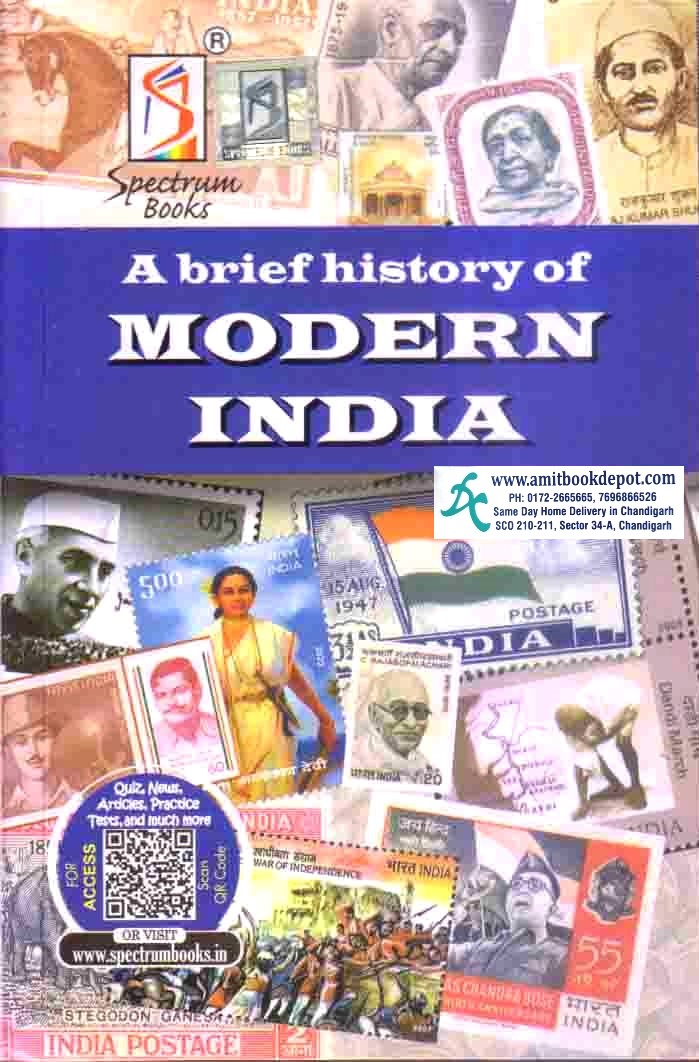
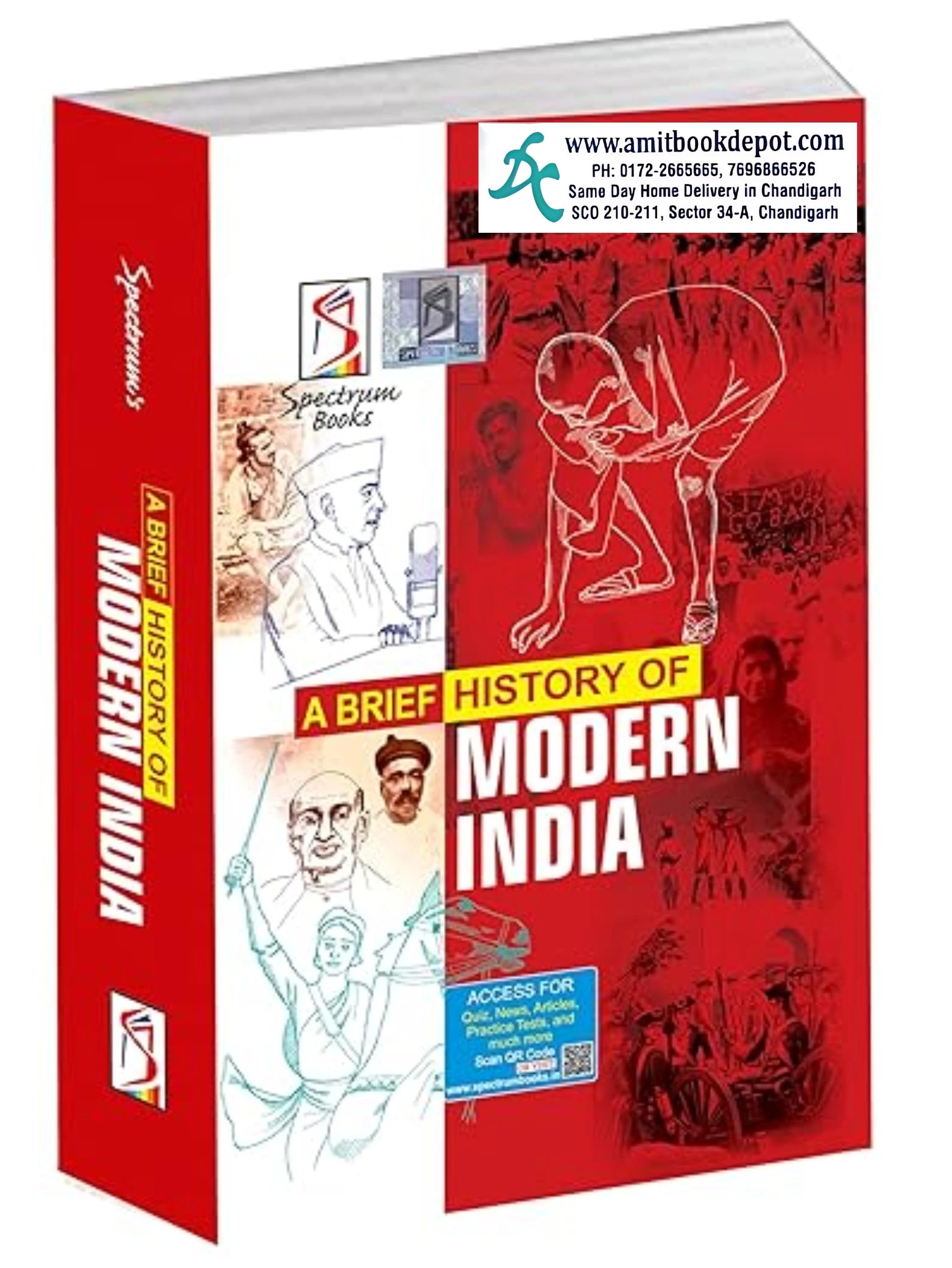
The latest edition includes updated content on the post-independence era, covering governments up to the current NDA administration, ensuring relevance for recent exam patterns.
Yes, it comprehensively covers the entire Modern History segment for GS Paper I, including the freedom struggle and post-independence consolidation.
Absolutely. The extensive section on "Independence and After" provides a detailed, analytical narrative of political events from 1947 onwards, which is crucial for Mains answers.
It dedicates full units to these themes, explaining their general features, key reformers, and their impact on the national movement in a structured, easy-to-understand manner.
Yes, Spectrum is considered a primary resource for Modern History in the Prelims. Its factual accuracy and comprehensive coverage make it highly reliable for objective-type questions.
Unit 9 of the book contains a dedicated chapter that analytically discusses the various facets of the British economic policy and its consequences on India.
This chapter helps in understanding the challenges and the process of building a democratic republic post-independence, a topic often asked in the Mains and Interview stages.
Yes, its lucid language and logical progression from basic sources and approaches to complex themes make it accessible for beginners.
It provides a detailed, phase-wise breakdown of Gandhi's emergence and his movements (Non-Cooperation, Civil Disobedience, Quit India), along with the internal debates and other forces that emerged during that time.
Yes, Chapter 34, "The Indian States: Growth of Nationalism, Integration, and Merger," deals specifically with this critical post-independence process.
No Description Added
The latest edition includes updated content on the post-independence era, covering governments up to the current NDA administration, ensuring relevance for recent exam patterns.
Yes, it comprehensively covers the entire Modern History segment for GS Paper I, including the freedom struggle and post-independence consolidation.
Absolutely. The extensive section on "Independence and After" provides a detailed, analytical narrative of political events from 1947 onwards, which is crucial for Mains answers.
It dedicates full units to these themes, explaining their general features, key reformers, and their impact on the national movement in a structured, easy-to-understand manner.
Yes, Spectrum is considered a primary resource for Modern History in the Prelims. Its factual accuracy and comprehensive coverage make it highly reliable for objective-type questions.
Unit 9 of the book contains a dedicated chapter that analytically discusses the various facets of the British economic policy and its consequences on India.
This chapter helps in understanding the challenges and the process of building a democratic republic post-independence, a topic often asked in the Mains and Interview stages.
Yes, its lucid language and logical progression from basic sources and approaches to complex themes make it accessible for beginners.
It provides a detailed, phase-wise breakdown of Gandhi's emergence and his movements (Non-Cooperation, Civil Disobedience, Quit India), along with the internal debates and other forces that emerged during that time.
Yes, Chapter 34, "The Indian States: Growth of Nationalism, Integration, and Merger," deals specifically with this critical post-independence process.