-
Mon-Fri: 10AM to 8PM 01722665665
-
My Account
-
-
0
Total :
₹ 0.00

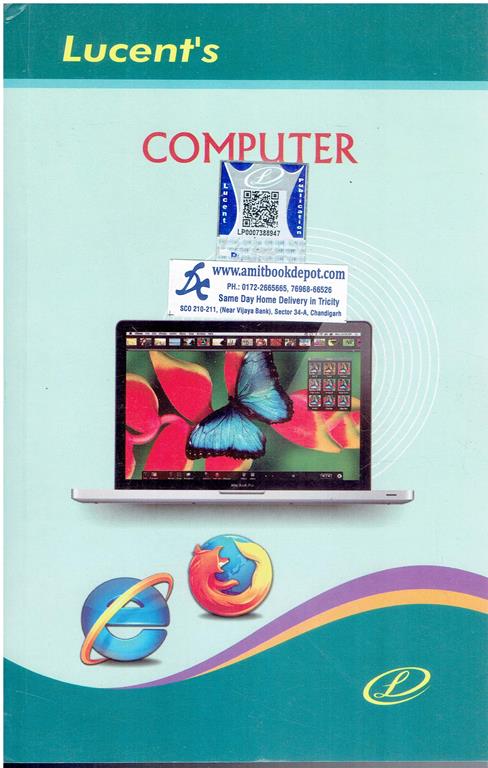
Lucent's Computer by Rani Ahilya, published by Lucent Publication, is a comprehensive and foundational guide to modern computing. This essential book covers core computer concepts, from hardware components like input/output devices and memory to software essentials including Microsoft Windows, Office, and Access. It provides clear explanations of data communication, the internet, programming languages, and data representation. Structured with a logical table of contents and a glossary of computer abbreviations, it is an invaluable resource for students, competitive exam aspirants, and beginners seeking a clear understanding of computer fundamentals.

The book is ideal for high school and undergraduate students, aspirants preparing for competitive exams like UPSC, SSC, Banking, Railways, teachers, and anyone interested in building a strong foundation in computer fundamentals.
The book emphasizes fundamental concepts and practical overviews of software like Windows, MS Office, and MS Access, but it does not delve into advanced or industry-specific case studies.
Yes, the book's exam-oriented structure, concise explanations, and inclusion of abbreviations make it a valuable resource for competitive exams requiring computer awareness.
The primary focus is on detailed explanations and concepts. Practice questions may not be included, so users should seek supplementary question banks for exam practice.
Absolutely. The clear language, structured chapters, and comprehensive coverage make it an excellent choice for self-study beginners.
It breaks down complex topics into simple, easy-to-understand explanations with diagrams and examples, making concepts like binary, octal, and hexadecimal systems accessible.
It includes a dedicated chapter on abbreviations related to computers, serving as a quick-reference glossary to aid understanding.
Yes, the book uses diagrams and illustrations to clarify hardware components, network configurations, and software interfaces.
It offers a well-structured, comprehensive overview from basic concepts to practical applications, making it a reliable and authoritative resource, especially for exam preparation and self-study.
While the book provides comprehensive coverage of core concepts and foundational topics, it primarily focuses on fundamental principles and widely used technologies. For the very latest updates, supplementary resources may be needed.
The book is ideal for high school and undergraduate students, aspirants preparing for competitive exams like UPSC, SSC, Banking, Railways, teachers, and anyone interested in building a strong foundation in computer fundamentals.
The book emphasizes fundamental concepts and practical overviews of software like Windows, MS Office, and MS Access, but it does not delve into advanced or industry-specific case studies.
Yes, the book's exam-oriented structure, concise explanations, and inclusion of abbreviations make it a valuable resource for competitive exams requiring computer awareness.
The primary focus is on detailed explanations and concepts. Practice questions may not be included, so users should seek supplementary question banks for exam practice.
Absolutely. The clear language, structured chapters, and comprehensive coverage make it an excellent choice for self-study beginners.
It breaks down complex topics into simple, easy-to-understand explanations with diagrams and examples, making concepts like binary, octal, and hexadecimal systems accessible.
It includes a dedicated chapter on abbreviations related to computers, serving as a quick-reference glossary to aid understanding.
Yes, the book uses diagrams and illustrations to clarify hardware components, network configurations, and software interfaces.
It offers a well-structured, comprehensive overview from basic concepts to practical applications, making it a reliable and authoritative resource, especially for exam preparation and self-study.
While the book provides comprehensive coverage of core concepts and foundational topics, it primarily focuses on fundamental principles and widely used technologies. For the very latest updates, supplementary resources may be needed.