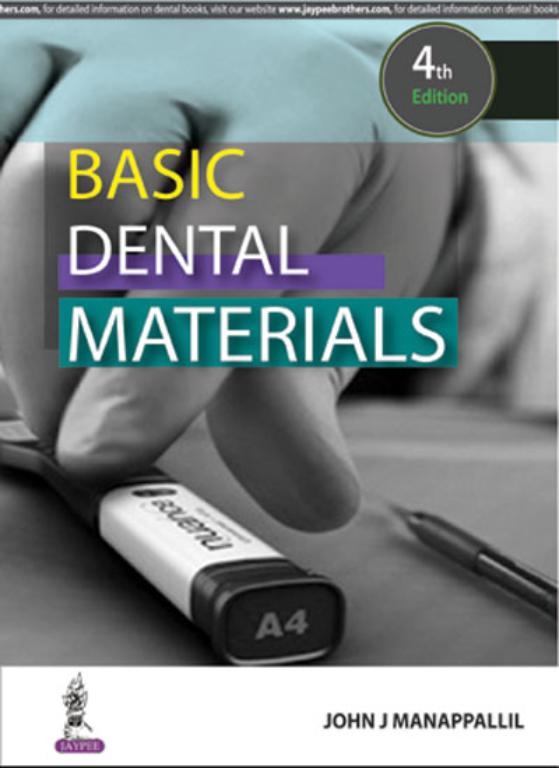
his book is specifically designed for undergraduate dental students and is particularly suitable for first-year courses. It helps students navigate the complex field of dental materials from the very beginning, using simple and accessible language while remaining informative and up-to-date .
Yes, it does. A key update in the 4th edition is the inclusion of a new chapter on "Additive Manufacturing in Dentistry," which covers the principles and applications of 3D printing in the dental field .
The book includes a dedicated section (Part 3) on endodontic materials. It features two specific chapters: one on "Endodontic Medicaments and Irrigants" and another on "Endodontic Sealers and Obturating Materials" .
Absolutely. The 30 chapters are organized into 7 thematic parts, ranging from the structure and properties of materials to indirect restorative materials .
The book bridges the gap between theory and practice. It not only covers the properties and structure of materials but also discusses their clinical considerations and interactions. For example, it explains the practical implications of material interactions, such as the effect of eugenol from ZOE products on resin-based composites .
Yes, the book is enriched with easy-to-reproduce illustrations, photographs, and descriptive tables .
Yes, this is a key clinical point covered in the book. It discusses how certain materials can adversely affect others, such as the interaction between provisional composites and elastomeric impression materials.
Yes, biological properties are a core component of the text. Part 1 includes a dedicated chapter on the "Biological Properties of Dental Materials" .
Yes, it covers prosthetic materials extensively. Part 7 is dedicated to "Indirect Restorative and Prosthetic Materials," which includes chapters on "Dental Ceramics," "Denture Resins and Polymers," and "Maxillofacial Prosthetic Materials" .
Yes, both are covered in Part 4: Impression Materials. The book discusses rigid materials like "Impression Compound and ZOE Paste" and elastic materials, which are further divided into hydrocolloids ("Agar and Alginate") and "Elastomeric Impression Materials" (like polysulfides, silicones, and polyethers) .
No Description Added
his book is specifically designed for undergraduate dental students and is particularly suitable for first-year courses. It helps students navigate the complex field of dental materials from the very beginning, using simple and accessible language while remaining informative and up-to-date .
Yes, it does. A key update in the 4th edition is the inclusion of a new chapter on "Additive Manufacturing in Dentistry," which covers the principles and applications of 3D printing in the dental field .
The book includes a dedicated section (Part 3) on endodontic materials. It features two specific chapters: one on "Endodontic Medicaments and Irrigants" and another on "Endodontic Sealers and Obturating Materials" .
Absolutely. The 30 chapters are organized into 7 thematic parts, ranging from the structure and properties of materials to indirect restorative materials .
The book bridges the gap between theory and practice. It not only covers the properties and structure of materials but also discusses their clinical considerations and interactions. For example, it explains the practical implications of material interactions, such as the effect of eugenol from ZOE products on resin-based composites .
Yes, the book is enriched with easy-to-reproduce illustrations, photographs, and descriptive tables .
Yes, this is a key clinical point covered in the book. It discusses how certain materials can adversely affect others, such as the interaction between provisional composites and elastomeric impression materials.
Yes, biological properties are a core component of the text. Part 1 includes a dedicated chapter on the "Biological Properties of Dental Materials" .
Yes, it covers prosthetic materials extensively. Part 7 is dedicated to "Indirect Restorative and Prosthetic Materials," which includes chapters on "Dental Ceramics," "Denture Resins and Polymers," and "Maxillofacial Prosthetic Materials" .
Yes, both are covered in Part 4: Impression Materials. The book discusses rigid materials like "Impression Compound and ZOE Paste" and elastic materials, which are further divided into hydrocolloids ("Agar and Alginate") and "Elastomeric Impression Materials" (like polysulfides, silicones, and polyethers) .