-
Mon-Fri: 10AM to 8PM 01722665665
-
My Account
-
-
0
Total :
₹ 0.00

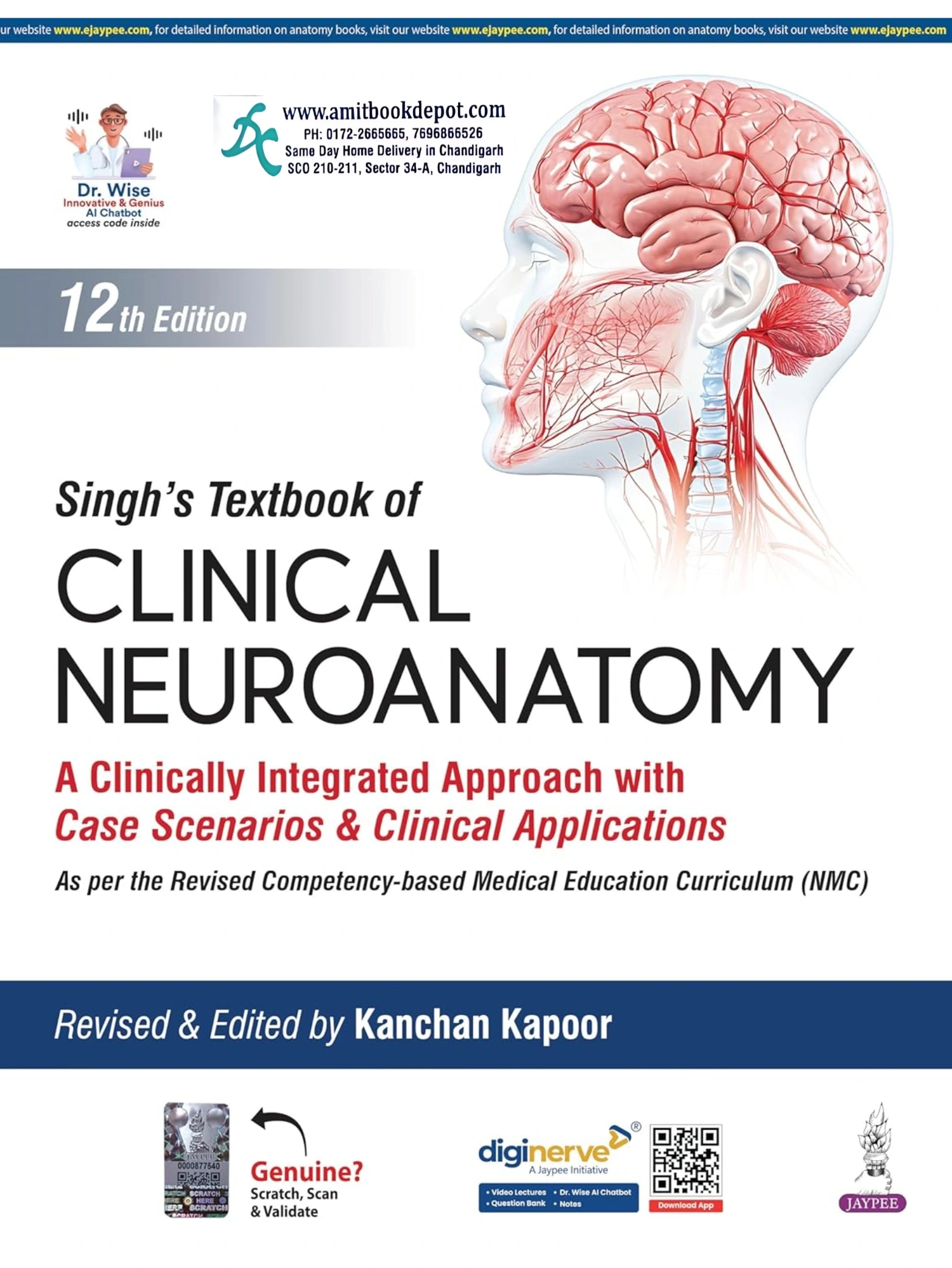





The book is aligned with the competency-based medical education curriculum, with all NMC competencies covered in each chapter and accessible via QR code .
New flowcharts, tables, and a "one-line definition" feature at each chapter's end have been added to facilitate memorization and quick grasp of topics .
It includes numerous clinical anatomy boxes, clinical-based problems with answers, and clinically based MCQs to enhance clinical correlation skills .
The medulla oblongata, pons, and midbrain each have individual chapters providing detailed anatomical and clinical insights .
Yes, Chapter 19 is specifically dedicated to the functional components of cranial nerves, a critical topic for clinical neurology .
Chapter 14 provides comprehensive coverage of the basal nuclei (basal ganglia), their connections, and their role in motor control .
Chapter 20, "Pathways of Special Senses," systematically outlines the neural routes for vision, hearing, smell, and taste .
Chapter 18 discusses the meninges and cerebrospinal fluid, including its production, circulation, and absorption .
Yes, Chapter 15 is dedicated to the limbic system and reticular formation, covering their roles in emotion, memory, and consciousness .
Absolutely. The first chapter is dedicated to the development of the nervous system, providing a foundational understanding of its structure .
No Description Added
The book is aligned with the competency-based medical education curriculum, with all NMC competencies covered in each chapter and accessible via QR code .
New flowcharts, tables, and a "one-line definition" feature at each chapter's end have been added to facilitate memorization and quick grasp of topics .
It includes numerous clinical anatomy boxes, clinical-based problems with answers, and clinically based MCQs to enhance clinical correlation skills .
The medulla oblongata, pons, and midbrain each have individual chapters providing detailed anatomical and clinical insights .
Yes, Chapter 19 is specifically dedicated to the functional components of cranial nerves, a critical topic for clinical neurology .
Chapter 14 provides comprehensive coverage of the basal nuclei (basal ganglia), their connections, and their role in motor control .
Chapter 20, "Pathways of Special Senses," systematically outlines the neural routes for vision, hearing, smell, and taste .
Chapter 18 discusses the meninges and cerebrospinal fluid, including its production, circulation, and absorption .
Yes, Chapter 15 is dedicated to the limbic system and reticular formation, covering their roles in emotion, memory, and consciousness .
Absolutely. The first chapter is dedicated to the development of the nervous system, providing a foundational understanding of its structure .