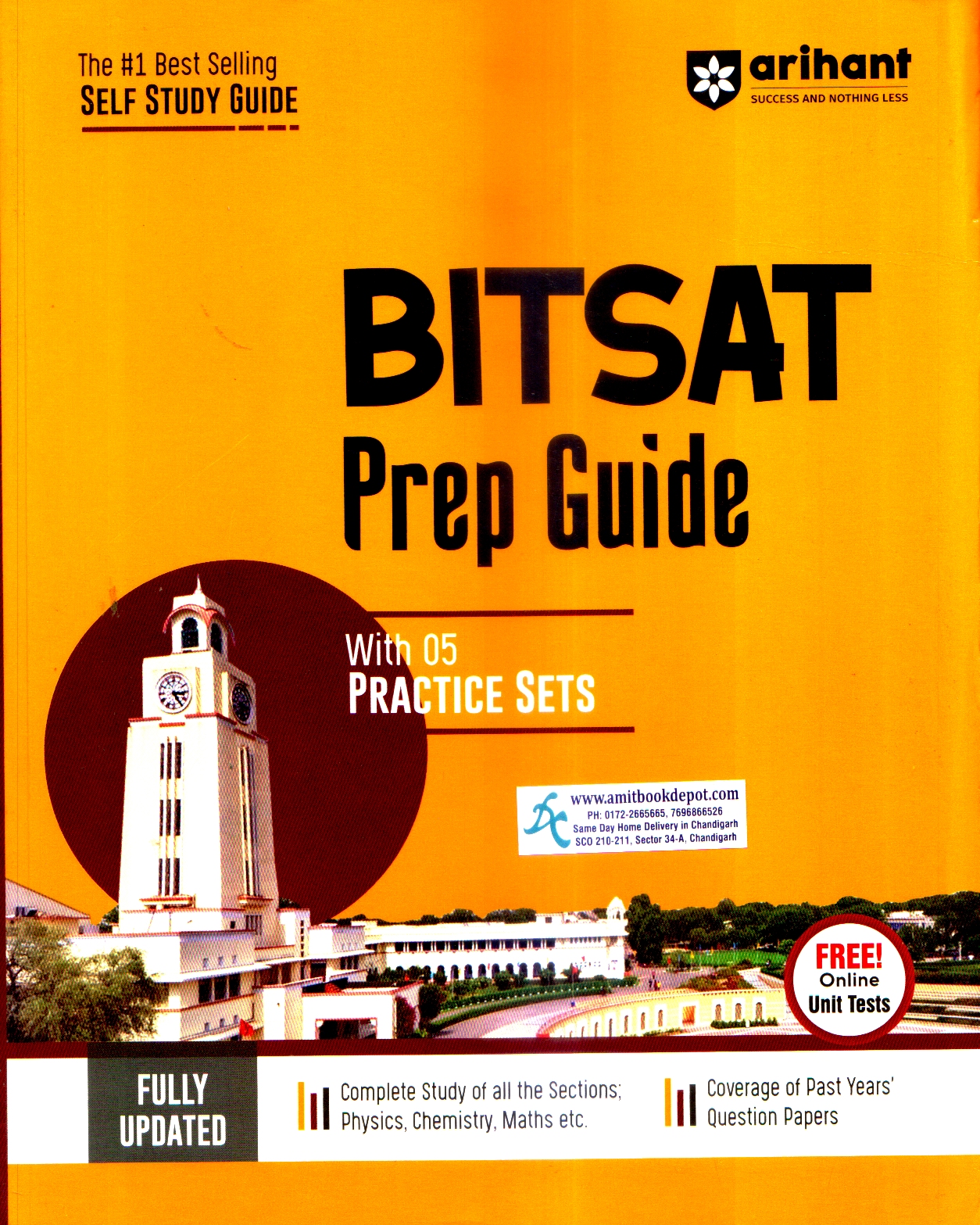
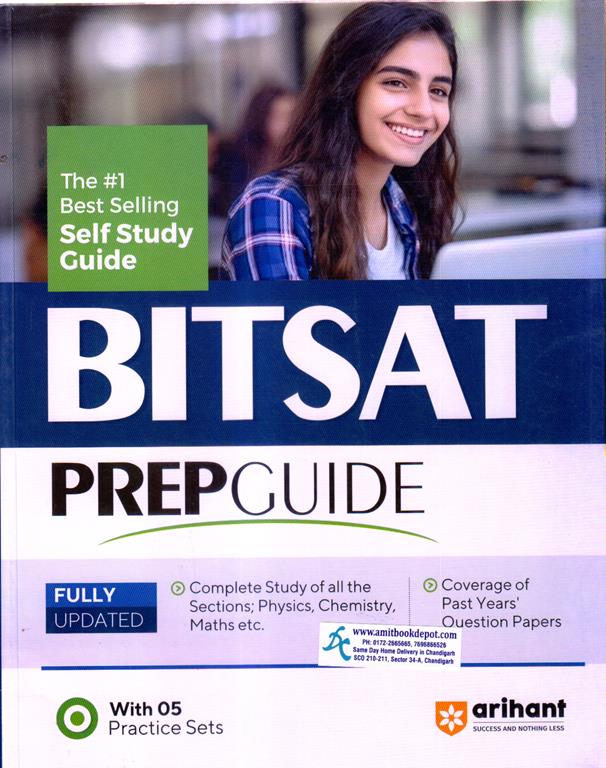
This Next-Gen Edition is comprehensively restructured to align perfectly with the latest BITSAT exam pattern and syllabus. It integrates updated content, includes a wider range of practice problems reflecting recent trends, and features enhanced sections on Logical Reasoning and English Proficiency with contemporary question types.
Yes, this is a complete all-in-one guide. It exhaustively covers all five sections: Physics (27 chapters), Chemistry (30 chapters), Mathematics (27 chapters), English Proficiency (4 modules), and Logical Reasoning (10 modules), as per the official BITSAT syllabus.
Absolutely. This guide specifically includes niche BITSAT topics that are often overlooked, such as 'Mathematical Modelling', 'Theoretical Principles of Experimental Chemistry' (volumetric analysis, qualitative analysis, lab techniques), and detailed 'Mathematical Reasoning', ensuring no part of the official syllabus is missed.
Yes, the Logical Reasoning section is meticulously divided into Verbal (Analogy, Classification, Series, etc.) and Non-Verbal (Pattern Perception, Figure Matrix, Paper Folding, etc.) reasoning, exactly mirroring the exam's scope. It provides the necessary practice for both conceptual and analytical thinking.
The book emphasizes conceptual clarity and application-based learning, which is key to solving problems quickly. The vast array of practice questions, coupled with the syllabus-oriented approach, builds familiarity and speed. Tips for efficient problem-solving are integrated throughout.
The English section is strategically broken into Grammar, Vocabulary, Reading Comprehension, and Composition. It covers everything from determiners and phrasal verbs to contextual vocabulary and paragraph unity, providing focused practice to significantly improve speed and accuracy in this section.
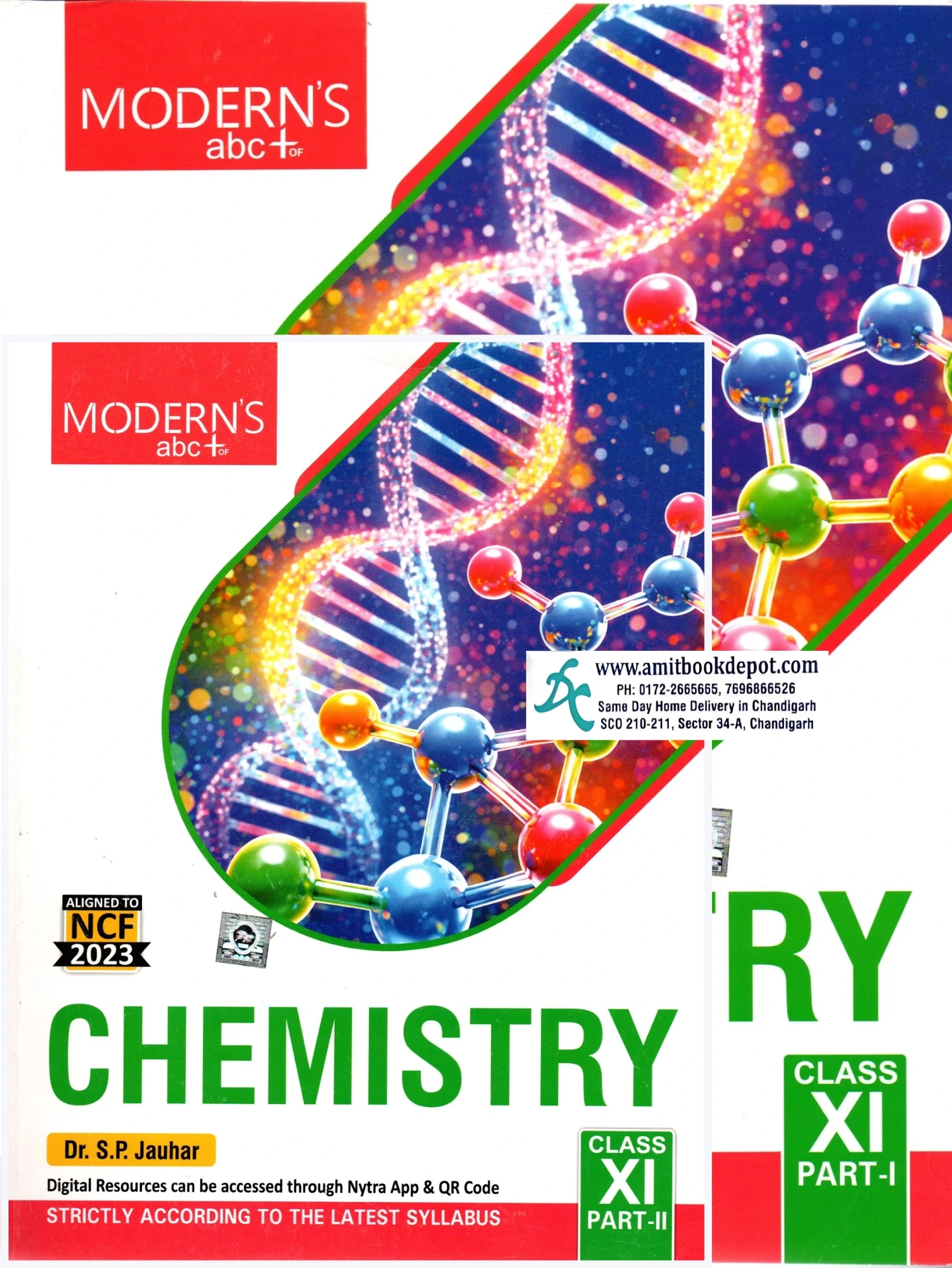
The Chemistry section is exceptionally detailed, spanning 30 chapters. It covers everything from basic concepts and atomic structure to specialized topics like polymer chemistry, biomolecules, chemistry in everyday life, and the entire theoretical experimental chemistry syllabus, ensuring thorough preparation.
While its primary focus is the BITSAT entrance exam, the book's alignment with the NCERT-based core syllabus for Physics, Chemistry, and Mathematics makes it an excellent complementary resource for reinforcing concepts tested in board exams, especially for application-based questions.
Yes, the Mathematics section is robust and includes advanced chapters like Complex Numbers, Binomial Theorem, Differential Equations, Vector Algebra, Three-Dimensional Coordinate Geometry, and Linear Programming, all presented with BITSAT-level problems.
This is a key strength of this guide. It dedicates a full chapter (Chapter 30 in Chemistry) to this, covering principles of volumetric analysis, qualitative salt analysis, physical chemistry experiments, purification methods, and organic chemistry experiments in a structured, theory-plus-application format.
No Description Added
This Next-Gen Edition is comprehensively restructured to align perfectly with the latest BITSAT exam pattern and syllabus. It integrates updated content, includes a wider range of practice problems reflecting recent trends, and features enhanced sections on Logical Reasoning and English Proficiency with contemporary question types.
Yes, this is a complete all-in-one guide. It exhaustively covers all five sections: Physics (27 chapters), Chemistry (30 chapters), Mathematics (27 chapters), English Proficiency (4 modules), and Logical Reasoning (10 modules), as per the official BITSAT syllabus.
Absolutely. This guide specifically includes niche BITSAT topics that are often overlooked, such as 'Mathematical Modelling', 'Theoretical Principles of Experimental Chemistry' (volumetric analysis, qualitative analysis, lab techniques), and detailed 'Mathematical Reasoning', ensuring no part of the official syllabus is missed.
Yes, the Logical Reasoning section is meticulously divided into Verbal (Analogy, Classification, Series, etc.) and Non-Verbal (Pattern Perception, Figure Matrix, Paper Folding, etc.) reasoning, exactly mirroring the exam's scope. It provides the necessary practice for both conceptual and analytical thinking.
The book emphasizes conceptual clarity and application-based learning, which is key to solving problems quickly. The vast array of practice questions, coupled with the syllabus-oriented approach, builds familiarity and speed. Tips for efficient problem-solving are integrated throughout.
The English section is strategically broken into Grammar, Vocabulary, Reading Comprehension, and Composition. It covers everything from determiners and phrasal verbs to contextual vocabulary and paragraph unity, providing focused practice to significantly improve speed and accuracy in this section.
The Chemistry section is exceptionally detailed, spanning 30 chapters. It covers everything from basic concepts and atomic structure to specialized topics like polymer chemistry, biomolecules, chemistry in everyday life, and the entire theoretical experimental chemistry syllabus, ensuring thorough preparation.
While its primary focus is the BITSAT entrance exam, the book's alignment with the NCERT-based core syllabus for Physics, Chemistry, and Mathematics makes it an excellent complementary resource for reinforcing concepts tested in board exams, especially for application-based questions.
Yes, the Mathematics section is robust and includes advanced chapters like Complex Numbers, Binomial Theorem, Differential Equations, Vector Algebra, Three-Dimensional Coordinate Geometry, and Linear Programming, all presented with BITSAT-level problems.
This is a key strength of this guide. It dedicates a full chapter (Chapter 30 in Chemistry) to this, covering principles of volumetric analysis, qualitative salt analysis, physical chemistry experiments, purification methods, and organic chemistry experiments in a structured, theory-plus-application format.