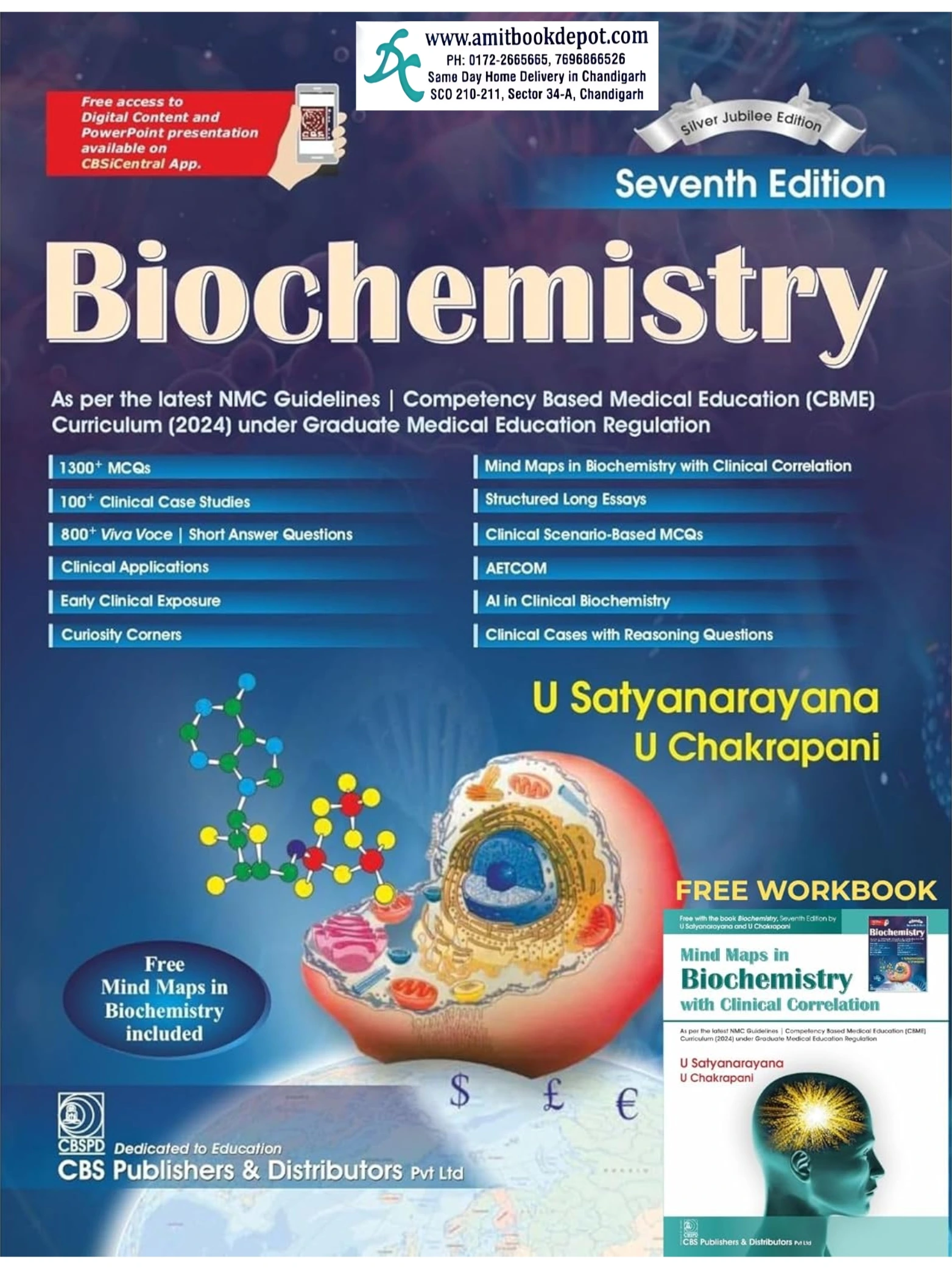
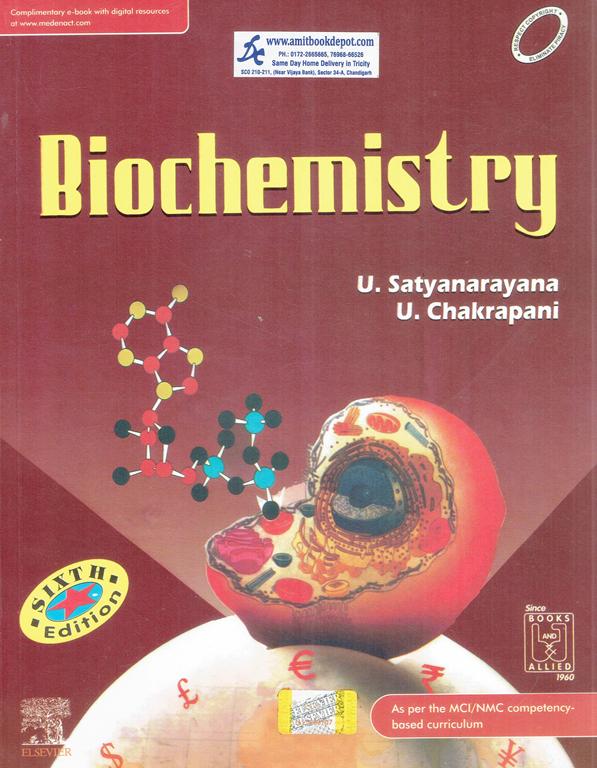
It uses structured mind maps to break down complex pathways like carbohydrate and lipid metabolism into clear, interconnected, and easily recallable visual diagrams.
The book includes a dedicated chapter on COVID-19, detailing the virology, pathogenesis, and biochemical aspects of the disease.
Yes, clinical correlations are seamlessly embedded within mind maps, linking biochemical concepts directly to diseases, diagnostic tests, and patient management.
Section V on Molecular Biology and Biotechnology provides comprehensive coverage of DNA replication, DNA damage, repair mechanisms, and gene expression.
Yes, the content is meticulously mapped to the latest competency-based curriculum, including a dedicated chapter on AETCOM (Attitude, Ethics, and Communication).
It covers artificial intelligence in the clinical biochemistry laboratory, newborn screening, and other advanced laboratory techniques.
The chapter on Glucose Homeostasis and Diabetes Mellitus explains insulin action, metabolic derangements, and the pathophysiology of the disease.
Yes, a chapter on Free Radicals and Antioxidants details the sources of reactive oxygen species and the body’s enzymatic and non-enzymatic defenses.
The first section on Chemical Constituents of Life covers the chemistry of carbohydrates, lipids, proteins, nucleic acids, and vitamins.
Mind maps are used to diagram the operon model in prokaryotes and the complex regulatory mechanisms in eukaryotes for clear understanding.
No Description Added
It uses structured mind maps to break down complex pathways like carbohydrate and lipid metabolism into clear, interconnected, and easily recallable visual diagrams.
The book includes a dedicated chapter on COVID-19, detailing the virology, pathogenesis, and biochemical aspects of the disease.
Yes, clinical correlations are seamlessly embedded within mind maps, linking biochemical concepts directly to diseases, diagnostic tests, and patient management.
Section V on Molecular Biology and Biotechnology provides comprehensive coverage of DNA replication, DNA damage, repair mechanisms, and gene expression.
Yes, the content is meticulously mapped to the latest competency-based curriculum, including a dedicated chapter on AETCOM (Attitude, Ethics, and Communication).
It covers artificial intelligence in the clinical biochemistry laboratory, newborn screening, and other advanced laboratory techniques.
The chapter on Glucose Homeostasis and Diabetes Mellitus explains insulin action, metabolic derangements, and the pathophysiology of the disease.
Yes, a chapter on Free Radicals and Antioxidants details the sources of reactive oxygen species and the body’s enzymatic and non-enzymatic defenses.
The first section on Chemical Constituents of Life covers the chemistry of carbohydrates, lipids, proteins, nucleic acids, and vitamins.
Mind maps are used to diagram the operon model in prokaryotes and the complex regulatory mechanisms in eukaryotes for clear understanding.