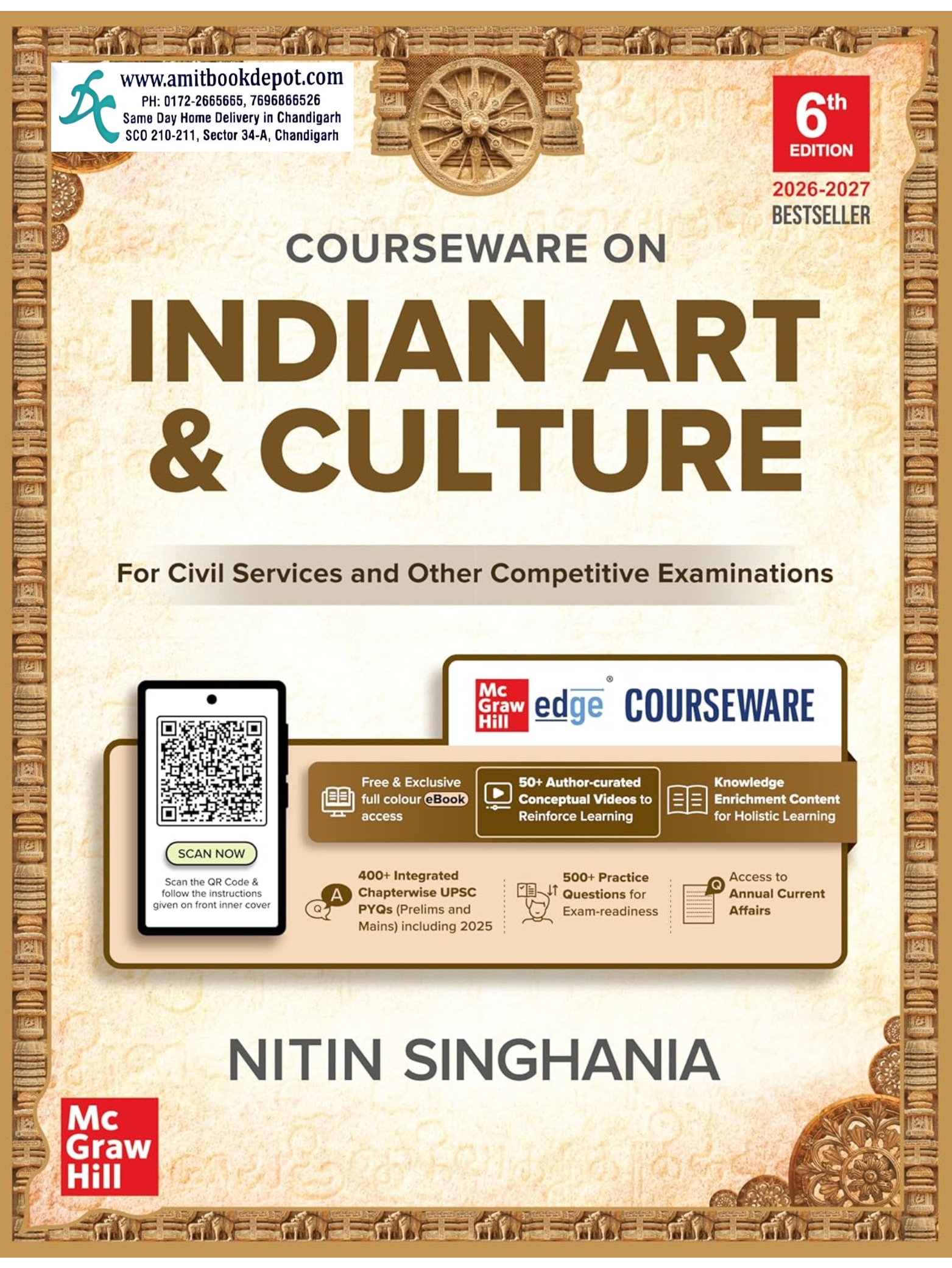
McGraw Hill Indian Art and Culture for UPSC and State Civil Services Examinations (6th Edition)
Authored by Nitin Singhania, this book is widely regarded as a cornerstone resource for aspirants preparing for the Union Public Service Commission (UPSC) Civil Services Examination and various State Public Service Commission (PSC) exams. The 6th Edition of Indian Art and Culture has been meticulously revised to align with the latest examination patterns and dynamic requirements of the General Studies papers, particularly Paper-I.
Comprehensive Coverage of the Syllabus
This book provides a holistic understanding of India's rich cultural tapestry, systematically divided into five key sections. It goes beyond mere facts to build a strong conceptual foundation, crucial for both the preliminary and main examinations.
1. Section A: Visual Arts: Delve into the origins of Indian culture with chapters on prehistoric cultures, Indian architecture (from ancient to mediaeval), sculpture and pottery, and Indian paintings. It also covers unique topics like edicts and inscriptions, the history of Indian coins, legendary cities, Indian handicrafts, and geographical indications, ensuring no stone is left unturned.
2. Section B: Performing Arts: Explore the melodic and rhythmic dimensions of Indian heritage through detailed chapters on Indian Music (Hindustani and Carnatic), Indian Dance (classical and folk), and Indian Theatre. This section also provides insights into puppetry, circus, traditional martial arts, and sports forms, highlighting their cultural significance.
3. Section C: Literary Arts: Understand the evolution of communication and expression with chapters on Indian Languages and Scripts and a thorough survey of Indian Literature across different eras.
4. Section D: Indian Heritage: This crucial section covers UNESCO World Heritage Sites in India and UNESCO’s List of Intangible Cultural Heritage, a high-yield area for the UPSC exam.
5. Section E: Indian Culture: This expansive section covers the philosophical and social fabric of India. It includes detailed chapters on major Religions in India, Buddhism and Jainism, Bhakti and Sufi traditions, and various Schools of Philosophy. It further elaborates on Fairs and Festivals, the history of Education in India, and Science and Technology Through the Ages. Additional topics like Calendar Systems, Cultural Institutions, Awards and Honours, the intersection of Law and Culture, historical Trade and Cultural Exchange, and accounts of India Through The Eyes of Foreign Travellers make this a complete reference.
Why This Book is Essential for Your Preparation
1. Exam-Oriented Approach: The content is structured specifically for the UPSC and State PCS syllabus. Key terms and concepts are highlighted for quick revision.
2. Rich Pedagogical Features: Complex topics are simplified using bullet points, flowcharts, tables, and diagrams. This visual aid enhances retention and makes learning engaging.
3. Integration of Previous Years’ Questions: The book incorporates questions from past examinations, helping you understand the question trends and the depth of knowledge required.
4. Updated Content: The 6th edition ensures all information, including data on cultural institutions, recent awards, and heritage sites, is current and accurate.
5. Covers Both Prelims and Mains: It serves as a single-window resource for both stages of the examination, from factual objective questions to descriptive answer-writing for the Mains.
Whether you are looking to build your foundation in Indian heritage or aiming to master the nuances of performing arts for the UPSC Mains, Nitin Singhania’s Indian Art and Culture is your go-to guide. Prepare with confidence and gain a decisive edge in the competitive civil services landscape with this authoritative text from McGraw Hill Education.