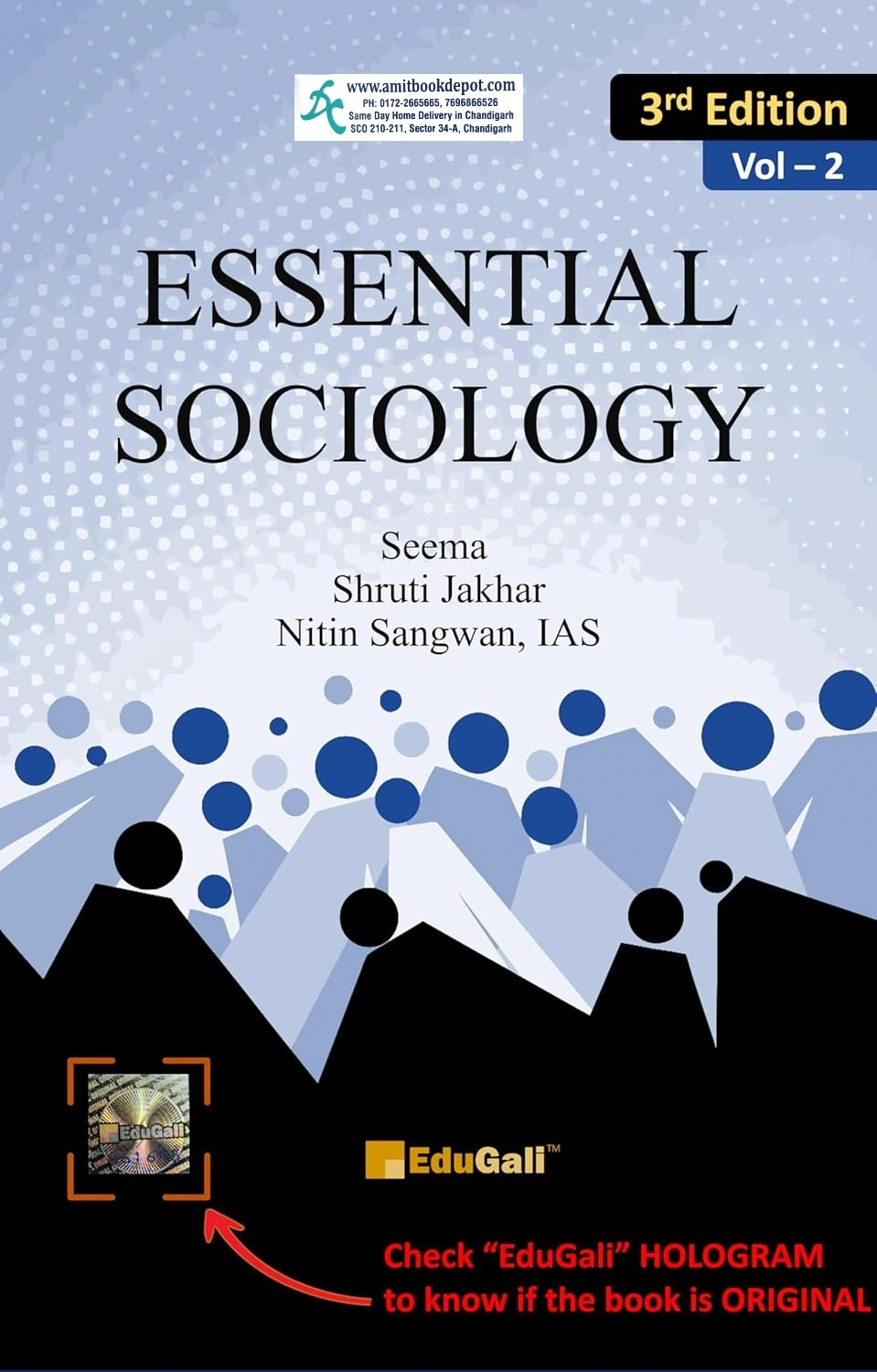
Yes, this volume is dedicated exclusively to Paper II (Indian Society: Structure and Change) and covers all topics in the UPSC syllabus comprehensively, from foundational perspectives to contemporary challenges.
Absolutely. The book dedicates significant sections to Indology, Structural-Functionalism, and Marxist Sociology in India, with detailed sub-sections on the specific contributions and theories of these seminal thinkers.
Chapter 14 includes a dedicated section on "Caste Question in the 21st Century" and covers contemporary dimensions like caste and politics, caste-class nexus, and continuity and change, ensuring relevance to current debates.
Yes, Chapter 23 is entirely devoted to Social Movements in Modern India, with detailed subsections on Dalit movements, Backward Class movements, Women’s movements, Peasants' movements, and Environmental movements.
Comprehensively. Chapter 21 covers the evolution of modern industry, social consequences of liberalization, growth and challenges of urbanization, and details on the working class and informal sector.
Yes, Chapter 24 on Population Dynamics covers current issues like aging, sex ratio, reproductive health, and migration with relevant data, and Chapter 25 discusses contemporary challenges like development displacement and sustainability.
Yes, these concepts are explained in simple, clear language within the context of M.N. Srinivas's work in Chapter 11, making them easy to understand and apply in answers.
Yes, Chapter 18 covers Religious Communities and Minority problems, and Chapter 22 includes a section on Secularization and India, providing ample material for questions on communalism and religious revivalism.
Yes, Chapter 19 covers the "Vision of Social Change in India," including the idea of development, planning, and the role of the Constitution, law, and education in driving social change.
Definitely. Separate chapters on Politics and Indian Society (Ch. 22) and Challenges of Social Transformation (Ch. 25) provide in-depth analysis of democracy, decentralization, poverty, inequalities, violence, and ethnic conflicts, essential for essays and GS papers as well.
No Description Added
Yes, this volume is dedicated exclusively to Paper II (Indian Society: Structure and Change) and covers all topics in the UPSC syllabus comprehensively, from foundational perspectives to contemporary challenges.
Absolutely. The book dedicates significant sections to Indology, Structural-Functionalism, and Marxist Sociology in India, with detailed sub-sections on the specific contributions and theories of these seminal thinkers.
Chapter 14 includes a dedicated section on "Caste Question in the 21st Century" and covers contemporary dimensions like caste and politics, caste-class nexus, and continuity and change, ensuring relevance to current debates.
Yes, Chapter 23 is entirely devoted to Social Movements in Modern India, with detailed subsections on Dalit movements, Backward Class movements, Women’s movements, Peasants' movements, and Environmental movements.
Comprehensively. Chapter 21 covers the evolution of modern industry, social consequences of liberalization, growth and challenges of urbanization, and details on the working class and informal sector.
Yes, Chapter 24 on Population Dynamics covers current issues like aging, sex ratio, reproductive health, and migration with relevant data, and Chapter 25 discusses contemporary challenges like development displacement and sustainability.
Yes, these concepts are explained in simple, clear language within the context of M.N. Srinivas's work in Chapter 11, making them easy to understand and apply in answers.
Yes, Chapter 18 covers Religious Communities and Minority problems, and Chapter 22 includes a section on Secularization and India, providing ample material for questions on communalism and religious revivalism.
Yes, Chapter 19 covers the "Vision of Social Change in India," including the idea of development, planning, and the role of the Constitution, law, and education in driving social change.
Definitely. Separate chapters on Politics and Indian Society (Ch. 22) and Challenges of Social Transformation (Ch. 25) provide in-depth analysis of democracy, decentralization, poverty, inequalities, violence, and ethnic conflicts, essential for essays and GS papers as well.