-
Mon-Fri: 10AM to 8PM 01722665665
-
My Account
-
-
0
Total :
₹ 0.00

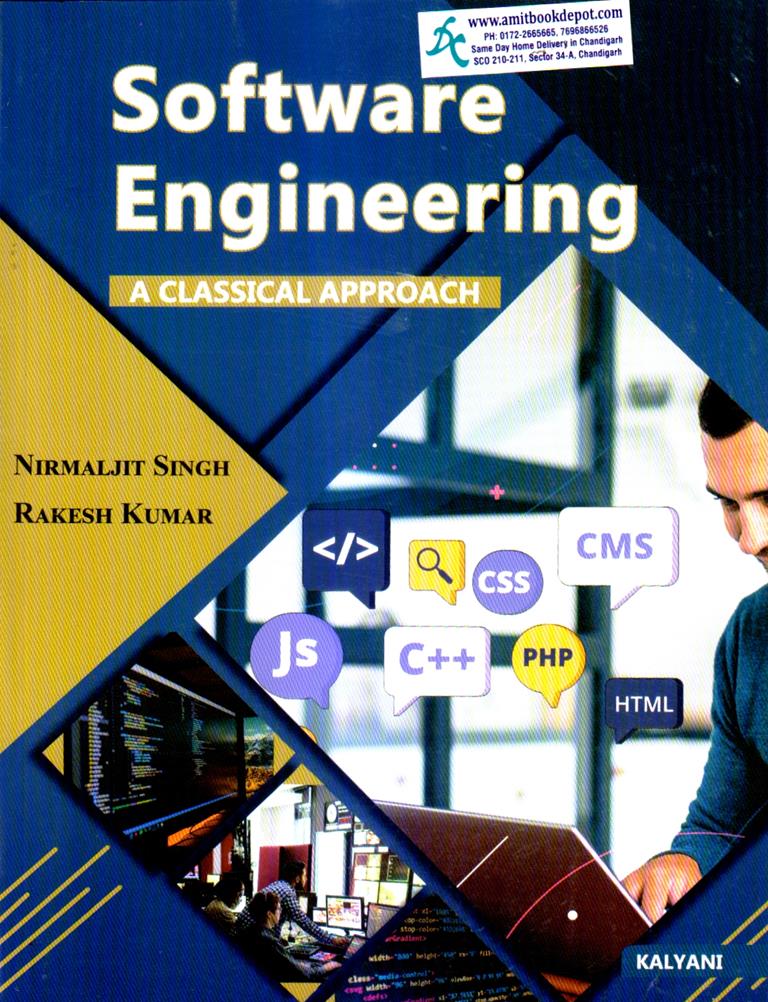


While it is meticulously aligned with Panjab University's PGDCA syllabus (Paper Code: PGD-2103), the book covers universal software engineering concepts. Its classical approach to topics like the SDLC, COCOMO model, and software testing makes it a valuable primer for students in any university's introductory software engineering or PGDCA program.
Yes, absolutely. Chapter 3, "Software Project Management," is dedicated to this. It provides detailed explanations of industry-standard scheduling tools, including the Work Breakdown Structure (WBS) , Gantt Charts, PERT, and the Critical Path Method (CPM) , equipping students with the skills to plan and track projects effectively.
The book offers a comparative study of several key process models in Chapter 2. It covers the traditional Waterfall Life Cycle Model, the iterative and risk-driven Boehm’s Spiral Life Cycle Model, and the modern stakeholder-focused Win-Win Spiral Model.
Chapter 4, "Software Project Estimation and Risk Management," provides a comprehensive overview. It defines software risks, explains the entire software risk management process, and breaks down the core activities of risk assessment (identification, analysis, prioritization) and risk control (planning, resolution, monitoring).
The COCOMO model (Constructive Cost Model) is a key topic in software cost estimation. It is thoroughly explained in Chapter 4 as part of the discussion on the cost estimation model, helping students understand how to estimate effort, time, and cost for software projects.
Yes, Chapter 6 is dedicated to "Structured Analysis and Design Tools." It provides a practical guide to creating Data Flow Diagrams (DFD) , along with explanations of the Data Dictionary (DD) and Entity-Relationship Diagrams (ERD) , which are essential for structured analysis.
It covers the full lifecycle, including the post-development phase. Chapter 8, "Software Quality and Maintenance," specifically addresses the aims of software maintenance, distinguishes between the types of software maintenance (corrective, adaptive, perfective, preventive), and discusses the factors contributing to software maintenance costs.
The book is structured directly around the Panjab University syllabus (Paper PGD-2103). Its division into sections (A, B, C, D) mirrors the exam pattern, ensuring comprehensive coverage of all topics likely to appear in the question paper, from Software Requirements Specification (SRS) to software design remedies.
Yes, the "Software Design" chapter (Chapter 5) does not just describe the design process; it also proactively discusses common design failures and remedies, helping students learn from typical pitfalls and build more resilient software architectures.
Absolutely. Its "classical approach" means it focuses on enduring principles and foundational knowledge—such as the characteristics, components, and applications of software—that remain relevant throughout a software professional's career. It serves as an excellent reference for fundamental concepts.
No Description Added
While it is meticulously aligned with Panjab University's PGDCA syllabus (Paper Code: PGD-2103), the book covers universal software engineering concepts. Its classical approach to topics like the SDLC, COCOMO model, and software testing makes it a valuable primer for students in any university's introductory software engineering or PGDCA program.
Yes, absolutely. Chapter 3, "Software Project Management," is dedicated to this. It provides detailed explanations of industry-standard scheduling tools, including the Work Breakdown Structure (WBS) , Gantt Charts, PERT, and the Critical Path Method (CPM) , equipping students with the skills to plan and track projects effectively.
The book offers a comparative study of several key process models in Chapter 2. It covers the traditional Waterfall Life Cycle Model, the iterative and risk-driven Boehm’s Spiral Life Cycle Model, and the modern stakeholder-focused Win-Win Spiral Model.
Chapter 4, "Software Project Estimation and Risk Management," provides a comprehensive overview. It defines software risks, explains the entire software risk management process, and breaks down the core activities of risk assessment (identification, analysis, prioritization) and risk control (planning, resolution, monitoring).
The COCOMO model (Constructive Cost Model) is a key topic in software cost estimation. It is thoroughly explained in Chapter 4 as part of the discussion on the cost estimation model, helping students understand how to estimate effort, time, and cost for software projects.
Yes, Chapter 6 is dedicated to "Structured Analysis and Design Tools." It provides a practical guide to creating Data Flow Diagrams (DFD) , along with explanations of the Data Dictionary (DD) and Entity-Relationship Diagrams (ERD) , which are essential for structured analysis.
It covers the full lifecycle, including the post-development phase. Chapter 8, "Software Quality and Maintenance," specifically addresses the aims of software maintenance, distinguishes between the types of software maintenance (corrective, adaptive, perfective, preventive), and discusses the factors contributing to software maintenance costs.
The book is structured directly around the Panjab University syllabus (Paper PGD-2103). Its division into sections (A, B, C, D) mirrors the exam pattern, ensuring comprehensive coverage of all topics likely to appear in the question paper, from Software Requirements Specification (SRS) to software design remedies.
Yes, the "Software Design" chapter (Chapter 5) does not just describe the design process; it also proactively discusses common design failures and remedies, helping students learn from typical pitfalls and build more resilient software architectures.
Absolutely. Its "classical approach" means it focuses on enduring principles and foundational knowledge—such as the characteristics, components, and applications of software—that remain relevant throughout a software professional's career. It serves as an excellent reference for fundamental concepts.