-
Mon-Fri: 10AM to 8PM 01722665665
-
My Account
-
-
0
Total :
₹ 0.00

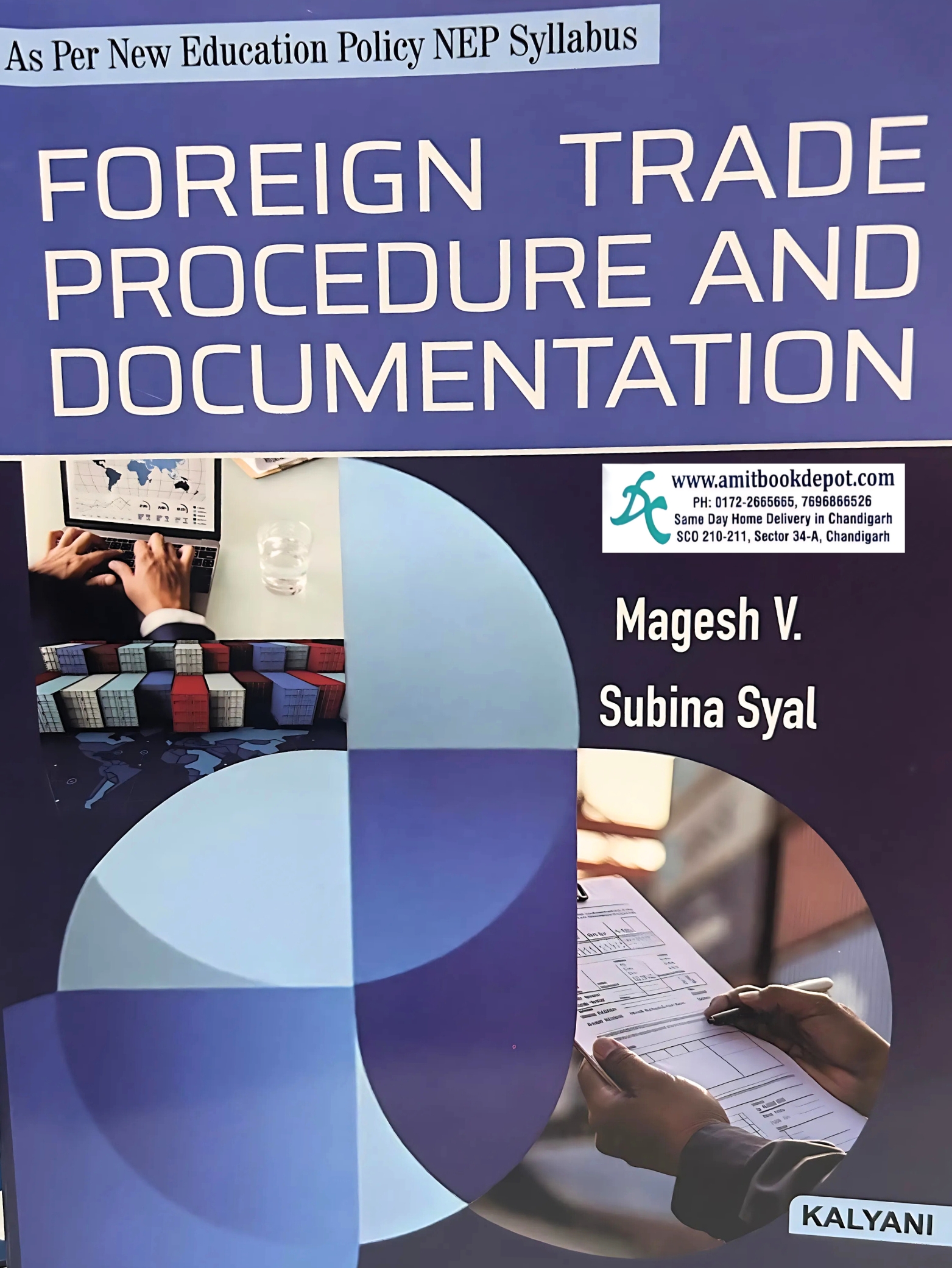
Yes, this book by Dr. Subina Syal and Dr. Mangesh V. is specifically designed and updated to align perfectly with the prescribed syllabus for PU CHD.
Absolutely. Unit II of the book provides dedicated and detailed chapters on both export procedures and import procedures, including specific documents for each.
ADS is a system designed to standardize and simplify export documents to reduce paperwork and errors. The book has a dedicated chapter (Chapter 4) that explains this concept in detail with its significance.
Yes, the book includes a full chapter on Electronic Data Interchange (EDI) and its role in modern export-import trade, as well as a chapter on the electronic processing of documentation.
The core knowledge on foreign trade procedures and documentation is fundamental and could be helpful as a reference. However, the book is primarily tailored for PU CHD university exams.
Yes, this book is an essential resource for all students enrolled in the B.Com/BBA program at PU CHD, including those in distance education, as it follows the university's syllabus.
The book is written in an academic yet clear and explanatory style, designed to make complex topics accessible to undergraduate students.
Chapter 2, "Classification of Export Documents," explicitly categorizes and explains the different types of documents, including the distinction between commercial and regulatory documents.
The chapters on regulatory documents and procedures inherently cover the roles of relevant governing authorities in the export-import process.
Yes, Chapter 10 is specifically dedicated to "Bill of Entry in Import Trade," detailing its purpose, types, and process from the importer's viewpoint.
No Description Added
Yes, this book by Dr. Subina Syal and Dr. Mangesh V. is specifically designed and updated to align perfectly with the prescribed syllabus for PU CHD.
Absolutely. Unit II of the book provides dedicated and detailed chapters on both export procedures and import procedures, including specific documents for each.
ADS is a system designed to standardize and simplify export documents to reduce paperwork and errors. The book has a dedicated chapter (Chapter 4) that explains this concept in detail with its significance.
Yes, the book includes a full chapter on Electronic Data Interchange (EDI) and its role in modern export-import trade, as well as a chapter on the electronic processing of documentation.
The core knowledge on foreign trade procedures and documentation is fundamental and could be helpful as a reference. However, the book is primarily tailored for PU CHD university exams.
Yes, this book is an essential resource for all students enrolled in the B.Com/BBA program at PU CHD, including those in distance education, as it follows the university's syllabus.
The book is written in an academic yet clear and explanatory style, designed to make complex topics accessible to undergraduate students.
Chapter 2, "Classification of Export Documents," explicitly categorizes and explains the different types of documents, including the distinction between commercial and regulatory documents.
The chapters on regulatory documents and procedures inherently cover the roles of relevant governing authorities in the export-import process.
Yes, Chapter 10 is specifically dedicated to "Bill of Entry in Import Trade," detailing its purpose, types, and process from the importer's viewpoint.