-
Mon-Fri: 10AM to 8PM 01722665665
-
My Account
-
-
0
Total :
₹ 0.00

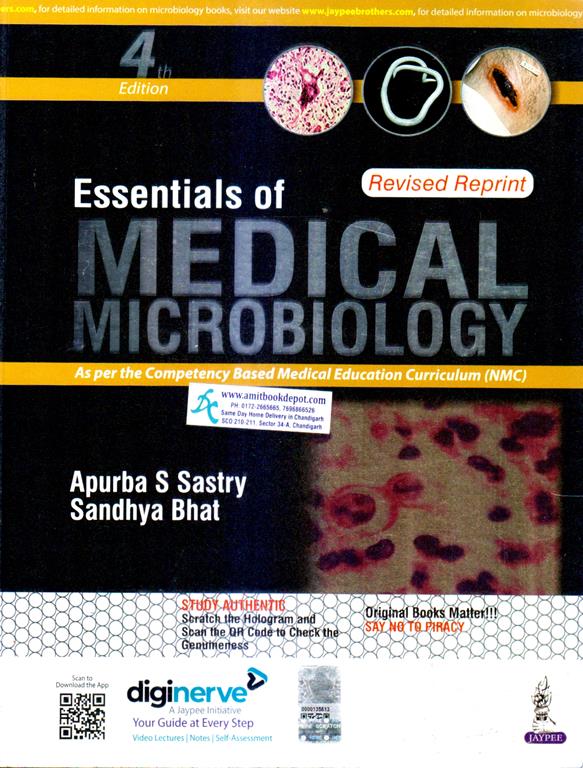





It is divided into General Microbiology, Immunology & Infection Control, followed by Systemic Microbiology covering organ-system infections.
Yes, Part I features a dedicated section on Hospital Infection Control, addressing HAIs, biomedical waste, and antimicrobial stewardship.
It covers infections of the cardiovascular, gastrointestinal, hepatobiliary, respiratory, central nervous, and urogenital systems, among others.
Yes, the content is structured to align with CBME guidelines, emphasizing clinical correlations and practical competencies required for students.
Immunology is presented with conceptual clarity, covering humoral and cell-mediated immunity, hypersensitivity reactions, and autoimmune disorders.
Yes, clinical case scenarios are integrated throughout to help readers apply knowledge to real-world patient diagnosis and management.
This edition includes updated content on molecular diagnostics, emerging infections, and recent advances in vaccinology.
They are systematically detailed in the Gastrointestinal Infections section, covering bacterial, viral, and parasitic causes of diarrheal diseases.
Yes, each systemic microbiology chapter details the pathogenesis, clinical features, and laboratory diagnosis of infectious diseases.
Yes, tuberculosis is covered in detail within the Respiratory Tract Infections section, including its pathogenesis and diagnostic methods.
No Description Added
It is divided into General Microbiology, Immunology & Infection Control, followed by Systemic Microbiology covering organ-system infections.
Yes, Part I features a dedicated section on Hospital Infection Control, addressing HAIs, biomedical waste, and antimicrobial stewardship.
It covers infections of the cardiovascular, gastrointestinal, hepatobiliary, respiratory, central nervous, and urogenital systems, among others.
Yes, the content is structured to align with CBME guidelines, emphasizing clinical correlations and practical competencies required for students.
Immunology is presented with conceptual clarity, covering humoral and cell-mediated immunity, hypersensitivity reactions, and autoimmune disorders.
Yes, clinical case scenarios are integrated throughout to help readers apply knowledge to real-world patient diagnosis and management.
This edition includes updated content on molecular diagnostics, emerging infections, and recent advances in vaccinology.
They are systematically detailed in the Gastrointestinal Infections section, covering bacterial, viral, and parasitic causes of diarrheal diseases.
Yes, each systemic microbiology chapter details the pathogenesis, clinical features, and laboratory diagnosis of infectious diseases.
Yes, tuberculosis is covered in detail within the Respiratory Tract Infections section, including its pathogenesis and diagnostic methods.