-
Mon-Fri: 10AM to 8PM 01722665665
-
My Account
-
-
0
Total :
₹ 0.00

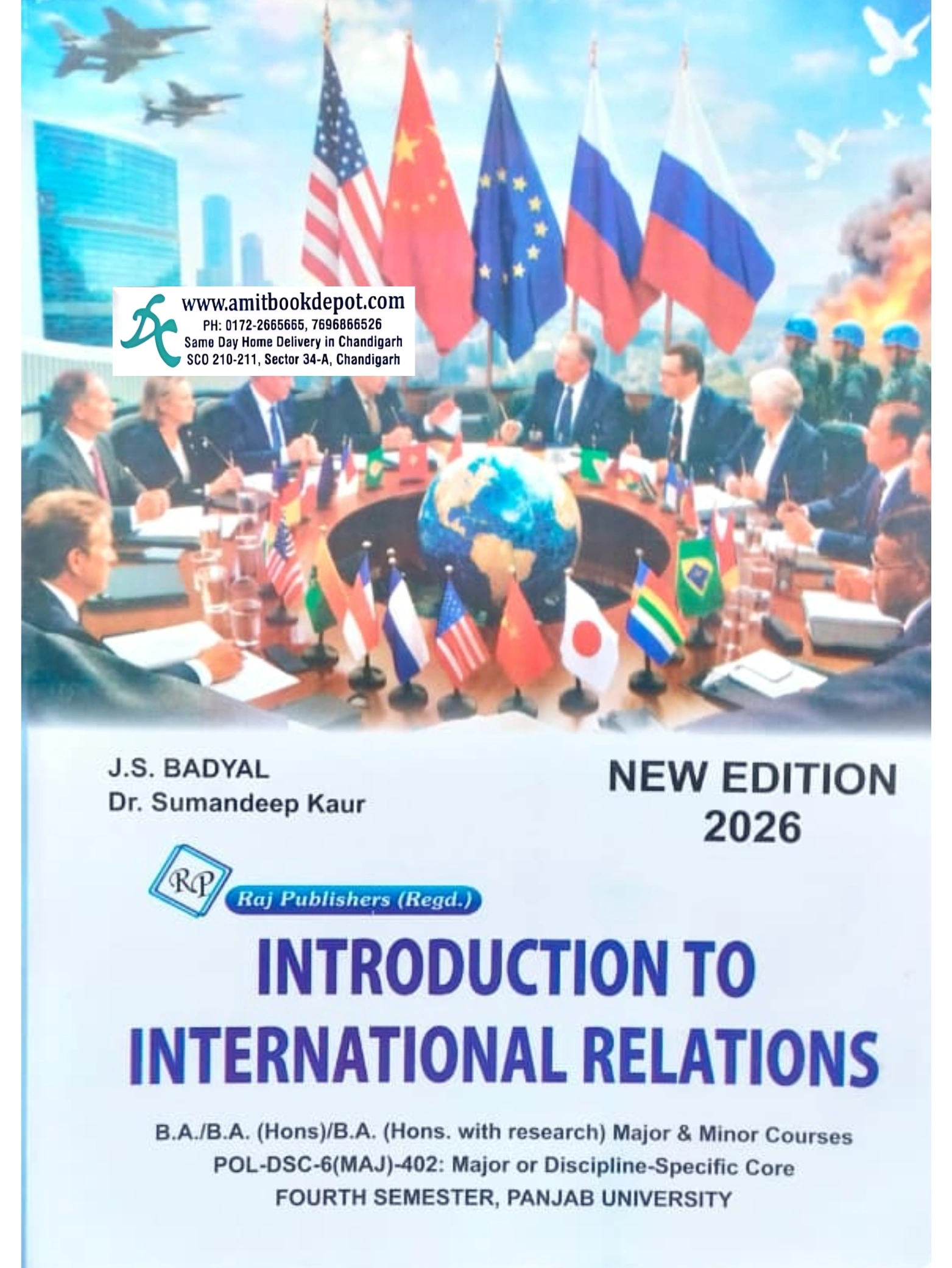


Yes, this book is meticulously aligned with the latest Panjab University syllabus for the POL-DSC-6(MAJ)-402 course. It covers all four units as prescribed, from theoretical approaches to post-Cold War international relations.
Absolutely. The book provides detailed chapters on all four approaches mentioned in Unit I: Idealism, Realism, Neoliberalism, and Neorealism, explaining their key thinkers, assumptions, and differences in a student-friendly manner.
Yes, the book breaks down complex theories into simple, digestible sections. It covers Marxist, Functionalist, and Systems Theory with clear explanations and examples, making them easy to learn and retain for the exam.
Yes, the book provides a thorough chronological analysis of the Cold War. It details its origin, the key phases including containment, arms race, détente, and proxy wars, providing a complete picture for students.
Yes, Unit IV contains dedicated sections on each of the specified centers of power. It explains the formation, objectives, achievements, and challenges of the EU, NAFTA, APEC, and BRICS in the contemporary global order.
Yes, this book is designed for the POL-DSC-6 core course, which is common for both BA General and B.A. (Hons) students in the 4th Semester at Panjab University, making it suitable for all.
Yes, the book connects these historical events effectively. It explains how the consequences of World War II, such as the division of Europe and the emergence of the US and USSR as superpowers, directly led to the origin of the Cold War.
The book explains Systems Theory by describing the international system as a whole. It discusses how the structure of the system (bipolar, unipolar, multipolar) influences the behavior and interactions of nation-states within it.
Yes, the chapter provides a detailed and analytical account of the Soviet collapse. It examines the economic, political, and social factors, as well as the role of Gorbachev's reforms (Perestroika and Glasnost), giving a well-rounded perspective.
The primary focus of the book is on the 90-mark theory paper. However, by providing a strong grasp of concepts and short answer questions, it indirectly helps students prepare for unit tests and class assignments that contribute to the 10-mark internal assessment.
No Description Added
Yes, this book is meticulously aligned with the latest Panjab University syllabus for the POL-DSC-6(MAJ)-402 course. It covers all four units as prescribed, from theoretical approaches to post-Cold War international relations.
Absolutely. The book provides detailed chapters on all four approaches mentioned in Unit I: Idealism, Realism, Neoliberalism, and Neorealism, explaining their key thinkers, assumptions, and differences in a student-friendly manner.
Yes, the book breaks down complex theories into simple, digestible sections. It covers Marxist, Functionalist, and Systems Theory with clear explanations and examples, making them easy to learn and retain for the exam.
Yes, the book provides a thorough chronological analysis of the Cold War. It details its origin, the key phases including containment, arms race, détente, and proxy wars, providing a complete picture for students.
Yes, Unit IV contains dedicated sections on each of the specified centers of power. It explains the formation, objectives, achievements, and challenges of the EU, NAFTA, APEC, and BRICS in the contemporary global order.
Yes, this book is designed for the POL-DSC-6 core course, which is common for both BA General and B.A. (Hons) students in the 4th Semester at Panjab University, making it suitable for all.
Yes, the book connects these historical events effectively. It explains how the consequences of World War II, such as the division of Europe and the emergence of the US and USSR as superpowers, directly led to the origin of the Cold War.
The book explains Systems Theory by describing the international system as a whole. It discusses how the structure of the system (bipolar, unipolar, multipolar) influences the behavior and interactions of nation-states within it.
Yes, the chapter provides a detailed and analytical account of the Soviet collapse. It examines the economic, political, and social factors, as well as the role of Gorbachev's reforms (Perestroika and Glasnost), giving a well-rounded perspective.
The primary focus of the book is on the 90-mark theory paper. However, by providing a strong grasp of concepts and short answer questions, it indirectly helps students prepare for unit tests and class assignments that contribute to the 10-mark internal assessment.