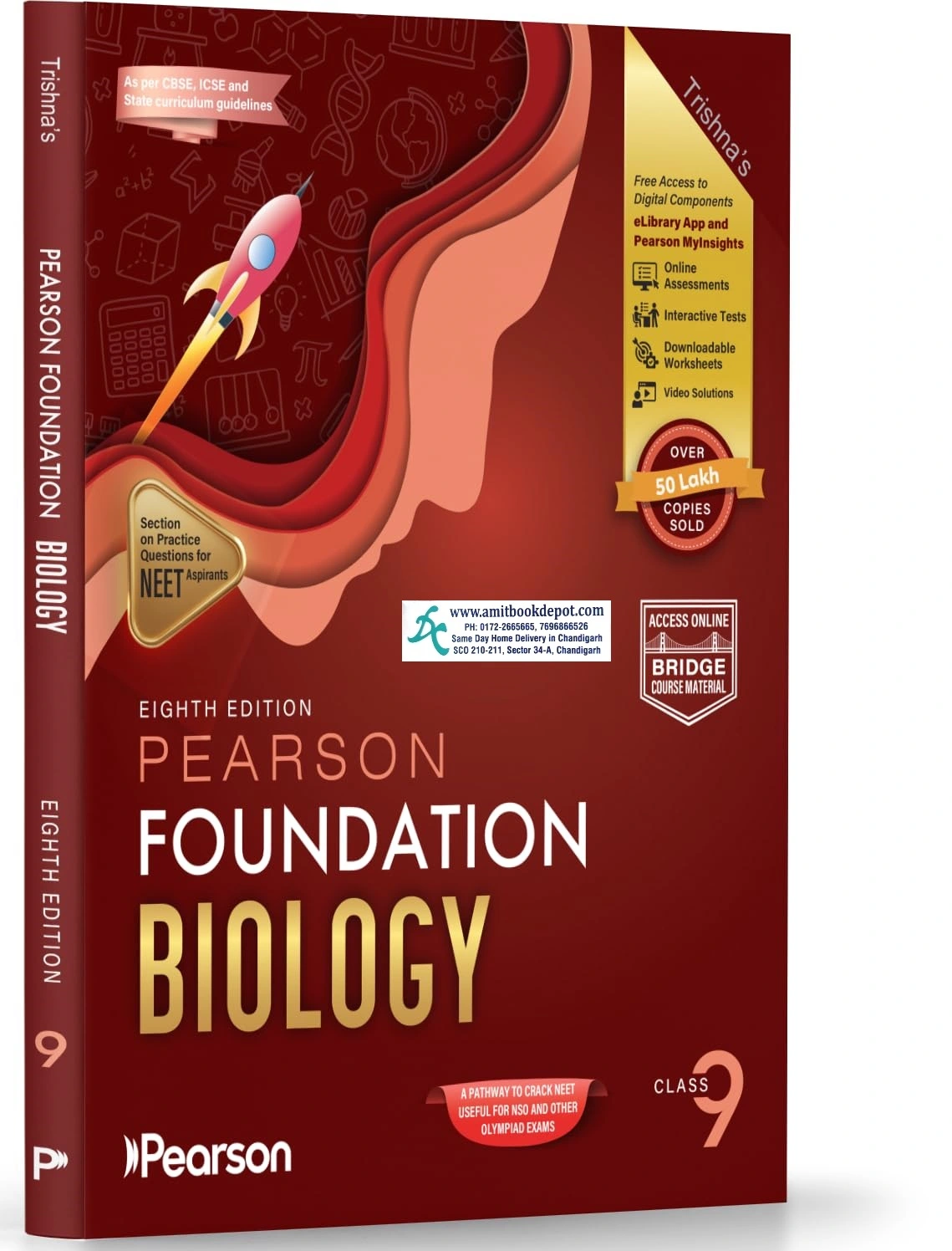
The 'Pearson IIT Foundation Series Biology for Class 9th' is a comprehensive blended learning resource designed for students aiming to build a robust foundation in biology for school and competitive exams. Authored by the expert team at Trishna Knowledge Systems, the 7th edition (2025) of this book is carefully structured to bridge the gap between the school curriculum and the requirements of prestigious entrance examinations. This coursebook serves as a key resource for Class 9 students, with content aligned to CBSE, ICSE, and various state boards, making it a versatile tool for a diverse student base.
The primary goal of this book is to help students optimize their preparation with comprehensive and reliable content. It is not merely a book but a preparation pathway for future medical and science professionals. The book's content and exercises are crafted to enhance student engagement and provide an improved learning experience. A key new feature of this revised edition is the inclusion of dedicated practice questions for NEET aspirants in each chapter, giving students that extra edge from an early stage.
The content is delivered through well-structured theory, supported by illustrative diagrams and real-life microscopic images to ensure conceptual clarity. Each chapter culminates in a 'Points to Remember' section for quick revision of essential concepts. The chapter-end exercises are strategically graded based on knowledge, application, and analysis to enhance critical thinking and problem-solving skills.
As a blended resource, the book is enriched with online digital components, including video solutions and interactive tests available via the Pearson MyInsights portal and elibrary. This combination of print and digital content provides a complete source to strengthen basic concepts and encourages self-study and independent learning. Whether preparing for NTSE, Olympiads, or the foundational stages of JEE and NEET, this book is designed to be a student's trusted companion for excelling in biology.