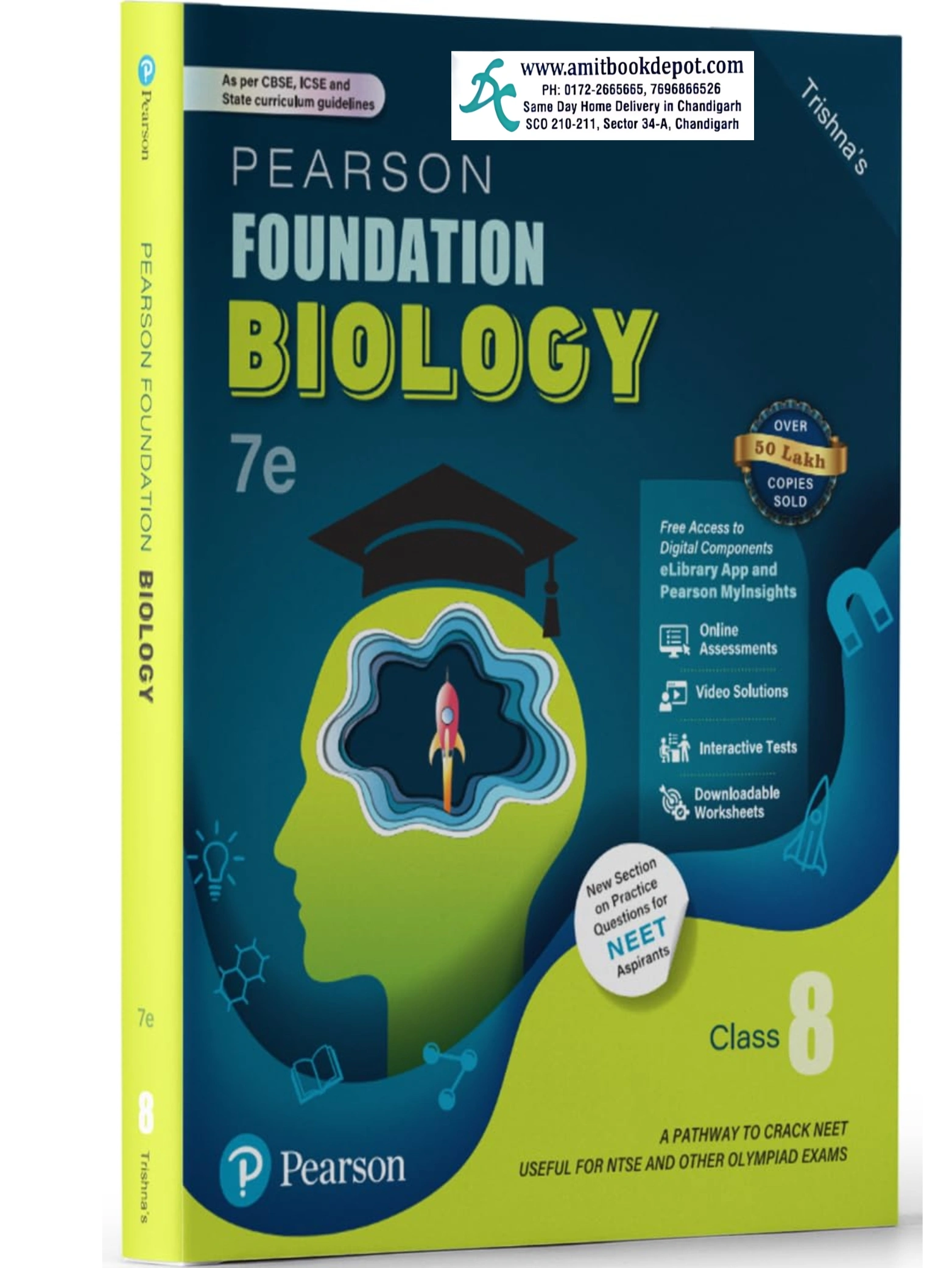
The Pearson Foundation Series Biology for Class 8 is a meticulously crafted academic resource designed to build a robust and comprehensive understanding of biological concepts for middle school students. Published by the globally recognized authority in education, Pearson Education, this book serves as a fundamental pillar for young learners embarking on a systematic exploration of the life sciences. Aligned with the standard Class 8 curriculum, the book transforms complex biological principles into engaging, accessible, and logically structured content, fostering both curiosity and academic excellence.
This book establishes a strong foundation by beginning with the cell—the basic unit of life. Students are introduced to cell structure, the intricacies of cell division, and its biological significance, laying the essential groundwork for all subsequent topics. The journey into living structures continues with an in-depth study of plant tissues and animal tissues, seamlessly linking form to function. This knowledge is practically applied in the chapters on body movements and the skeletal system, where students learn how biological structures facilitate motion and support in organisms.
A core segment of the book is dedicated to the classification of living organisms. It methodically teaches the hierarchy of classification, introduces the universal system of binomial nomenclature, and provides a glimpse into the history of classification, thereby sharpening students' scientific methodology and taxonomic skills. The critical life process of reproduction is covered exhaustively across kingdoms. The chapters on reproduction in animals and plants, along with growth and development in human beings, explain vital concepts from fertilization to life cycles with clarity and appropriate detail.
Understanding the invisible world is made possible through the comprehensive unit on microorganisms and human health. This section distinguishes between useful microorganisms and harmful microorganisms, directly connecting this knowledge to human health and immunity. It provides a clear overview of human diseases, their causes, and preventive measures, making biology highly relevant to everyday life.
The book excels in expanding the learner's perspective from organisms to systems and the environment. The chapter on the ecosystem and biodiversity breaks down the components of an ecosystem, discusses natural resources, and addresses pressing issues like pollution. It strongly emphasizes biodiversity, wildlife, and its conservation, instilling a sense of environmental stewardship. Finally, the book connects biology to human sustenance through food production and management. It covers crops, modern agricultural practices, plant improvement programs, animal husbandry, and the role of useful microorganisms in agriculture, presenting a holistic view of biology's application in food security.
The Pearson Foundation Series Biology for Class 8 is characterized by its student-centric pedagogy. Key features include clearly defined learning objectives, vivid and detailed illustrations and diagrams, in-text keyword definitions, illustrative examples, and a wide range of end-of-chapter exercises. These exercises include objective-type questions, short and long answer questions, application-based problems, and activities to promote hands-on learning. The language is precise, age-appropriate, and designed to enhance comprehension and retention.
As an indispensable tool for Class 8 students, this book not only prepares learners for academic assessments but also ignites a lasting interest in the biological sciences. It is the ideal choice for schools, educators, and parents seeking a reliable, authoritative, and engaging biology book for Class 8 that ensures conceptual clarity and paves the way for future scientific learning.